Distilled water for CPAP is one of those rules every machine manual repeats but almost none of them explain. You're told to use it, never tap water — but not why a few minerals matter when you're only heating a small tank overnight. The short version: distilled water is the only water that leaves nothing behind when it evaporates, and "nothing behind" is exactly what you want sitting next to a heating element you breathe over every night.
This guide covers what distilled water actually is, how it compares to purified, bottled, and tap, what tap water does to your humidifier over time, the cheapest way to keep a supply, and how to travel with it without trouble at security.
What Distilled Water Actually Is
Distilled water is water that has been boiled into steam and re-condensed, leaving behind virtually all dissolved minerals, salts, and contaminants. The result measures close to 0 ppm (parts per million) total dissolved solids — as pure as residential water gets.
That number is the whole point. Your CPAP humidifier works by evaporating water into the air you breathe. When water evaporates, anything dissolved in it stays behind in the chamber. Distilled water has nothing dissolved in it, so nothing accumulates.
Compare that to what comes out of your tap. Municipal tap water typically runs 50–500 ppm TDS, mostly calcium and magnesium — the same "hardness" minerals that fur up a kettle. Every night you run tap water, a thin layer of those minerals bakes onto your chamber and heating plate.
The bottom line: distilled isn't about purity for purity's sake. It's the only water that won't leave a mineral fingerprint inside your humidifier.
Distilled vs Purified vs Bottled vs Tap
Not all "clean" water is equal for CPAP use. The deciding factor is mineral content (TDS), because minerals are what scale your humidifier — not bacteria, which the heat largely handles.
| Water Type | Typical TDS | Safe for daily CPAP use? | Notes |
|---|---|---|---|
| Distilled | ~0 ppm | ✅ Yes — the standard | Cheapest mineral-free option; ~$1–$1.50/gallon |
| Purified (RO / deionized) | under 10 ppm | ✅ Acceptable | Reverse-osmosis or deionized; very close to distilled |
| Bottled spring water | 100–300 ppm | ⚠️ Occasional only | Minerals are often added for taste — will scale over time |
| Bottled "purified" drinking | 5–50 ppm | ⚠️ Check the label | Varies widely; only fine if truly RO/deionized |
| Tap water | 50–500 ppm | ❌ No | Causes scale and harbors residue; manufacturer-discouraged |
| Boiled tap water | 50–500 ppm | ❌ No | Boiling kills bacteria but leaves ALL minerals behind |
The two big misconceptions live in that last column. First, bottled water is not automatically safe — spring water frequently has more minerals than tap because they're added for flavor. Second, boiling does not equal distilling. Boiling sanitizes; it doesn't remove minerals. If anything, boiling concentrates them as some water evaporates.
If you can't get distilled, true reverse-osmosis or deionized purified water is the best substitute. Everything else is a one-night compromise, not a routine.
What Tap Water Does to Your Humidifier
Using tap water won't kill your machine overnight, but it quietly degrades the humidifier in three measurable ways.
1. Mineral scale. Within days to a couple of weeks in a hard-water area, you'll see a chalky white film on the chamber walls and heating plate. It's calcium carbonate — limescale — and it bonds tightly. Once it's baked on, it resists ordinary washing and usually needs a vinegar soak to lift.
2. Bacterial footholds. Scale isn't smooth. Its rough, porous surface gives bacteria and biofilm more places to cling than clean plastic, which is why a scaled chamber gets grimy faster even with regular rinsing.
3. Shorter component life. The heating plate is designed to warm clean water. A mineral crust acts as insulation, forcing the element to work harder to hit the same temperature — and a chamber pitted with scale is one you'll replace years sooner than you should.
There's also the airway question. Whatever is dissolved in your water sits in the path of the air you breathe all night. With distilled water that's nothing; with tap water it's trace minerals and whatever else your municipal supply carries. For a device used 6–8 hours a night over the airway, "nothing" is the right amount.
If you're noticing odor despite good water, a CPAP-safe disinfectant spray is an easy extra step between deep cleans for your mask and hose. It won't remove scale; that still takes a vinegar soak. Automated sanitizer machines like the SoClean aren't currently sold on Amazon, so a hypochlorous acid spray (ozone-free, used by hand) is the simplest option there.
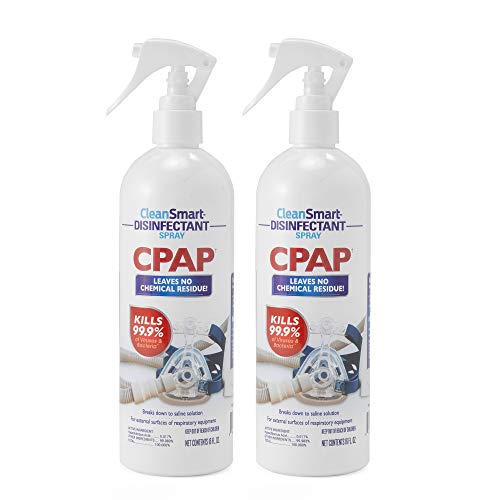
CleanSmart CPAP Disinfectant Spray, Hypochlorous (16 oz, 2-pack)
$24.99
Check price on AmazonHow to Get (or Make) Distilled Water Cheaply
Distilled water is one of the cheapest consumables in CPAP ownership, so the goal is simply a reliable, low-friction supply.
Buying it is almost always the right answer. A gallon of distilled water costs roughly $1.00–$1.50 at grocery, drug, and big-box stores, and a single gallon lasts most users one to two weeks depending on humidity setting and climate. That's about $30–$50 a year — less than a single replacement water chamber.
| Source | Typical price | Cost per gallon | Best for |
|---|---|---|---|
| Grocery / big-box (gallon jug) | $1.00–$1.50 | $1.00–$1.50 | Everyday home supply |
| Pharmacy (gallon) | $1.50–$2.50 | $1.50–$2.50 | Convenience / refills |
| Bulk online (case of 6) | $12–$20 | $2.00–$3.30 | Stocking up, rural delivery |
| Home distiller (countertop) | $80–$200 unit | ~$0.25 in electricity | Very high-volume or off-grid use |
For travel, gallon jugs are impractical and leak-prone — pre-bottled, vapor-distilled CPAP water, sized for a humidifier chamber and TSA-friendly, is the convenient option on the road:

AQUAPAP Distilled Water for CPAP Machines | 12 Oz Travel Water Bottles for CPAP Humidifier | Vapor Distilled CPAP Water Compatible with ResMed & Respironics | TSA Approved | 8 Pack
$19.99
Check price on Amazon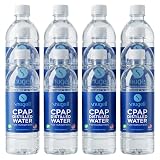
Snugell Distilled Water for CPAP Machines - Travel Size Bottles, Clean Multi-Use Hydration - Made in USA - Up to 30 Days Supply - 16.9 Fl Oz (Pack of 12)
$31.99
Check price on Amazon
Resway American Red Cross CPAP Distilled Water Travel Bottles for CPAP Humidifiers & Sleep Therapy Equipment, Purified Bottled Water Compatible with ResMed & Respironics Machines, 16.9 oz (12 Pack)
$31.99
Check price on AmazonMaking it at home rarely pays off. You can collect condensed steam from a pot of boiling water, but the yield is small and the electricity often costs more than buying a jug. A countertop distiller only makes financial sense if you run a humidifier nightly at a high setting, distill water for other uses too, or live somewhere distilled water is hard to buy.
One more time, because it's the most common mistake: boiling tap water does not make distilled water. It kills microbes but leaves every mineral in place. If your goal is a scale-free humidifier, boiled tap water solves the wrong problem.
Traveling With Distilled Water
Distilled water is treated as a medical liquid, which means you have more flexibility than the standard 3.4 oz carry-on rule suggests.
At airport security, the TSA allows distilled water for a CPAP humidifier in quantities above the liquid limit when you declare it as a medical necessity. Tell the officer it's for your CPAP, keep it separate from your other liquids, and expect the container to be screened or tested. The practical move for many travelers is to fly with an empty water chamber and buy a small bottle of distilled water on arrival — it avoids spills, weight, and the security conversation entirely.
On the road, distilled water is sold at virtually every grocery and pharmacy, so a road trip rarely requires hauling a supply. If you're heading somewhere remote, a few bottles in the car cover you. And if you're sleeping off-grid where every watt counts, remember that running the humidifier is optional — skipping it not only removes the water question but dramatically extends battery runtime, a trade-off covered in our guide to CPAP humidifier battery drain.
For international trips, water purity standards vary, so distilled (sealed, store-bought) remains the safest choice abroad. Pair that with the right adapter and voltage setup from the sleep apnea travel guide and your humidifier behaves the same in any country.
Related reading
- CPAP Humidifier Battery Drain: What's Actually Using Your Power
- Flying With a CPAP: TSA Rules, Battery Limits, and Carry-On Tips
- Sleep Apnea Travel Guide: CPAP Power Abroad and On the Road
- Best CPAP Filters 2026: ResMed, Philips & Universal Options
- Most Power-Efficient CPAP Machines for Battery Use in 2026
What to do next
- Buy distilled — not "purified" or "spring." Grab a gallon labeled distilled for ~$1–$1.50. If distilled is unavailable, reverse-osmosis or deionized purified water (under 10 ppm TDS) is the only acceptable substitute.
- Empty and dry the chamber each morning. Tip out leftover water daily and let the chamber air-dry. Standing water — even distilled — invites biofilm.
- Deep-clean weekly. Wash the chamber in warm soapy water once a week. If you've ever used tap water, soak the chamber in a 1:1 white vinegar solution for 20–30 minutes to dissolve existing scale, then rinse thoroughly.
- Pack smart for trips. Fly with an empty chamber and buy distilled water at your destination, or declare it at security as a medical liquid.
Distilled water is the rare CPAP rule that's both cheap and absolute: about $40 a year buys you a humidifier that stays clean, a heating element that lasts, and air with nothing extra in it. There's no upside to cutting that corner.