Update (September 2026): SoClean machines, including the SoClean 3, are currently unavailable on Amazon (as of September 2026). Lumin availability on Amazon has been inconsistent, and we couldn't confirm a current price when we checked. This comparison remains for reference — for daily cleaning, most CPAP users now rely on manual cleaning plus wipes and sprays (see below).
Most CPAP users shopping for a cleaning device have heard of SoClean and Lumin — and most have never heard of the FDA warning that applies to one of them. In the SoClean vs Lumin comparison space, the safety question gets buried under marketing claims about "99.9% germ elimination." Before you spend $259 to $349 on a CPAP sanitizer, you need the full picture: what regulators have actually said, what a federal lawsuit revealed, and whether either device is worth it at all.
This guide gives you the risk assessment first, then the comparison.
The FDA Warning and Class-Action Lawsuit: What You Need to Know
The bottom line: The FDA formally warned in 2020 that ozone-generating CPAP cleaners — including SoClean — have not been reviewed for safety or effectiveness as medical devices, and that ozone can harm airways and degrade equipment.
In October 2020, the FDA issued a Safety Communication stating that it was "not aware of any ozone- or UV-C light-based equipment cleaner or disinfection device marketed for use with CPAP devices that has been FDA-cleared." The agency went further specifically regarding ozone, warning that ozone is a lung irritant and that the devices "may damage the CPAP components."
This wasn't a minor footnote. The FDA explicitly called out that ozone concentrations sufficient to kill pathogens are also known to be harmful to the human respiratory system — the exact system CPAP therapy is designed to protect.
Then in 2023, a class-action lawsuit against SoClean was settled. The lawsuit alleged that SoClean's ozone-based cleaner:
- Degraded silicone components in masks, tubing, and humidifier chambers
- Was not as safe or effective as advertised
- Caused material damage to CPAP equipment that cost users money in replacement parts
SoClean settled without admitting wrongdoing, and the company continues to dispute the FDA's characterization of its products. The SoClean 3 sold for approximately $299 – $349, but it is currently unavailable on Amazon (as of September 2026).
What does this mean for current users? If you already own a SoClean, you are not in immediate danger from a single exposure. The concern is cumulative: repeated ozone exposure through inadequately aired-out equipment, and long-term degradation of rubber and silicone components. If you are immunocompromised, have asthma, or use a CPAP for any respiratory condition beyond sleep apnea, the risk calculus shifts further toward caution.
In short: The 2020 FDA guidance and 2023 settlement are not minor controversies. They are material facts that any CPAP cleaner buyer should weigh before purchasing.
How SoClean Works (and Why It's Controversial)
The bottom line: SoClean generates ozone (activated oxygen, O₃) inside a sealed chamber to kill pathogens. It is effective in lab conditions, but the same chemical properties that make ozone a disinfectant also make it a lung irritant and a potential degrader of CPAP materials.
The Mechanism
SoClean connects to your CPAP machine through an adapter. When you run a cycle, the device pumps ozone into the CPAP's tubing, mask, and humidifier chamber. Ozone is an unstable molecule — it oxidizes and destroys the cell walls of bacteria, mold, and viruses on contact. The process requires no water and no disassembly.
A standard SoClean cycle runs approximately 2 hours when you include the required neutralization and air-out period. This is not optional: ozone must fully dissipate before you sleep with the equipment, or you risk inhaling residual gas.
SoClean 3 Specs (2026)
| Spec | Detail |
|---|---|
| Model | SoClean 3 |
| Price | $299 – $349 |
| Cleaning mechanism | Ozone (activated oxygen, O₃) |
| Cycle time | ~7 min active + ~2 hr air-out |
| FDA status | Not cleared as a medical device |
| Compatible machines | Most major CPAP brands (with adapters) |
| Warranty | 2 years |
Availability note (September 2026): The SoClean 3 is currently unavailable on Amazon, and we found no other in-stock SoClean listing. There is no machine we'd call a direct replacement — if you were considering one, skip to what to use instead for a manual-cleaning alternative.
The Pros
- Truly hands-free: Connect once, run daily without disassembly
- Reaches internal components: Ozone circulates through the entire CPAP circuit including internal pathways
- Large install base: Millions of units sold; SoClean has significant customer support infrastructure
- No water required: No risk of mold from residual water in the chamber
The Cons
- FDA 2020 warning: Explicitly not cleared; ozone flagged as a potential airway irritant
- 2023 class-action settlement: Allegations of component damage were significant enough to settle
- Component degradation: Ozone is known to accelerate the breakdown of silicone, rubber, and certain plastics — the primary materials in CPAP masks and tubing
- Long effective cycle time: The 2-hour air-out period is non-negotiable for safety
- Price: $299 – $349 is a significant investment for a device with unresolved regulatory questions
- Void warranties: Many CPAP and mask manufacturers will not honor warranties on equipment cleaned with ozone devices
If you use a SoClean and want to minimize risk: always run the full air-out cycle, inspect your mask cushion and tubing monthly for cracks or brittleness, and replace components on schedule — or sooner if you notice premature degradation.
How Lumin Works (and Why It's Different)
The bottom line: Lumin by 3B Medical uses UV-C light at 254nm — the germicidal wavelength — to sanitize CPAP components. UV-C does not carry the FDA warning that applies to ozone devices, and it does not degrade silicone the way ozone does.
The Mechanism
The Lumin is a drawer-style device roughly the size of a toaster. You remove your mask cushion, place it in the drawer, close it, and press start. The UV-C lamp activates for a 5-minute cycle, then shuts off. UV-C at 254nm disrupts the DNA and RNA of microorganisms, preventing them from replicating. This is the same technology hospitals have used for surface disinfection for decades.
The critical distinction: UV-C is a physical process (light). It leaves no chemical residue, produces no airborne byproduct, and dissipates instantly when the lamp turns off. You can use the equipment immediately after a Lumin cycle.
Lumin Specs (2026)
| Spec | Detail |
|---|---|
| Model | Lumin by 3B Medical |
| Price | $259 – $299 |
| Cleaning mechanism | UV-C light at 254nm |
| Cycle time | 5 minutes |
| FDA status | Not cleared as a CPAP cleaning device (but no ozone-specific warning) |
| Compatible items | Mask cushion, headgear, water chamber (external surfaces) |
| Warranty | 2 years |
Availability note (September 2026): Lumin availability on Amazon has been inconsistent, and we couldn't confirm a current price when we checked, so we aren't linking a listing here. The specs and prices above reflect the Lumin as previously sold. If you want its speed-and-safety benefits without the hardware, the wipes and sprays below are the practical alternative.
The Pros
- 5-minute cycle: Fastest automated cleaning option available
- No chemical residue: UV-C produces no ozone, no byproduct, no required air-out time
- No component degradation: UV-C does not chemically attack silicone or rubber
- Affordable: At $259 – $299, it undercuts the SoClean 3
- Hospital-validated technology: UV-C germicidal effectiveness is well-documented in peer-reviewed literature
- Safer FDA position: The FDA's 2020 warning targeted ozone specifically; UV-C devices were not singled out in the same way
The Cons
- Line-of-sight limitation: UV-C only sanitizes surfaces it can directly illuminate. Internal CPAP tubing and pathways are not reachable — you must clean tubing manually
- External surfaces only: The lamp cleans what's placed in the drawer. The interior of your CPAP machine is not cleaned
- Still not FDA-cleared: No automated CPAP cleaner has gone through FDA device clearance
- Lamp lifespan: UV-C lamps degrade over time; Lumin recommends lamp replacement after approximately 9,000 hours
- Requires disassembly: You need to detach and place components in the drawer, unlike SoClean's connected approach
In short: Lumin's UV-C approach is not perfect — the line-of-sight limitation is real — but it avoids the specific risks that the FDA warning and 2023 lawsuit highlighted about ozone.
SoClean vs Lumin: Side-by-Side Comparison
| Feature | SoClean 3 | Lumin (3B Medical) |
|---|---|---|
| Price | $299 – $349 | $259 – $299 |
| Mechanism | Ozone (O₃) | UV-C light (254nm) |
| FDA status | Not cleared; ozone-specific 2020 warning | Not cleared; no ozone-specific warning |
| Legal history | 2023 class-action settlement | No major legal action |
| Cycle time (ready to use) | ~2 hours (air-out required) | 5 minutes |
| Cleans internal tubing | Yes (ozone circulates through) | No (line-of-sight only) |
| Component damage risk | Moderate–High (silicone/rubber degradation) | Low |
| Disassembly required | No | Yes (mask cushion removal) |
| Chemical residue | Yes (ozone must dissipate) | No |
| Warranty impact | May void CPAP/mask warranties | May void CPAP/mask warranties |
| Best for | Users prioritizing internal circuit cleaning | Users prioritizing speed and safety profile |
The table makes the trade-off clear. SoClean reaches places Lumin cannot — the internal CPAP circuit — but at meaningful cost in terms of safety concerns, cycle time, price, and component longevity. Lumin is faster, cheaper, and carries less regulatory baggage, but you must manually clean your tubing alongside it.
What to use instead in 2026
With the SoClean unavailable and the Lumin hard to count on, the practical path for daily CPAP hygiene is wipes and sprays paired with a simple manual routine. Two affordable, widely available options cover most users:
- resplabs CPAP Mask Wipes (~$13) — unscented, lint-free wipes for a quick daily wipe-down of the mask cushion and frame. Convenient for travel days and nightly use, and safe for silicone.
- CleanSmart CPAP Disinfectant Spray (~$25 for two 16 oz bottles) — an ozone-free hypochlorous acid spray for masks and hoses, rated 4.5 stars across roughly 12,000 reviews. Good for tubing, headgear, and the humidifier chamber between deeper washes.
Together these cost far less than a $259 – $349 sanitizer and carry none of the ozone regulatory baggage. To be clear, the spray is not a machine: it won't clean your CPAP hands-free the way SoClean promised, and you still do the wiping and rinsing yourself. Pair it with the manual routine below for the gold-standard approach.
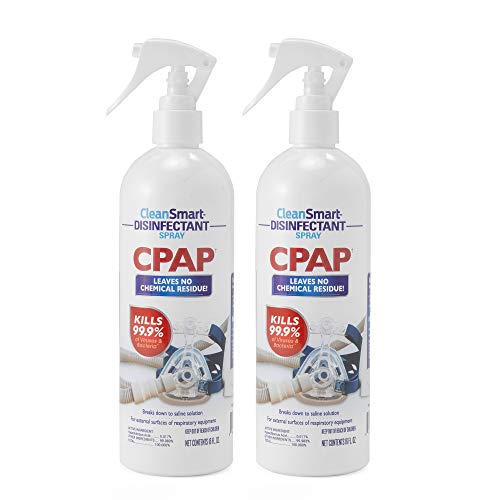
CleanSmart CPAP Disinfectant Spray, Hypochlorous (16 oz, 2-pack)
$24.99
Check price on AmazonWhat About Manual Cleaning and CPAP Wipes?
The bottom line: Manual cleaning with mild soap and water is free, effective, endorsed by CPAP manufacturers, and avoids every regulatory and legal concern associated with automated cleaners.
Before you spend any money on a cleaning device, understand what your CPAP manufacturer actually recommends: warm water and a small amount of unscented, mild dish soap. That's it. This method does not void your CPAP warranty. It does not expose you to ozone. It does not require a $259 – $349 investment.
Daily Manual Cleaning Routine
- Mask cushion and frame: Rinse with warm water each morning; mild soap weekly
- Headgear: Hand wash weekly in mild soap; air dry
- Tubing: Rinse with warm water daily; hang to dry completely
- Humidifier chamber: Empty and rinse daily; weekly wash with white vinegar solution (1:3 ratio with water) to reduce mineral deposits
CPAP Wipes
CPAP-specific wipes are a legitimate middle ground for daily surface cleaning. Look for products containing quaternary ammonium compounds or Control III Germicidal Solution (diluted to label instructions). These are effective against a broad spectrum of pathogens and are safe for silicone and plastic surfaces. A container of CPAP wipes runs $10 – $20 and lasts several months.
The Honest Case for Automated Cleaners
Manual cleaning works — but adherence is the real variable. If you travel frequently, if you are elderly or have mobility limitations, or if the friction of daily manual cleaning leads you to skip it, then an automated device that gets used is better than a manual routine that doesn't. This is the strongest legitimate argument for devices like Lumin.
If you use CPAP while traveling or during power outages, the cleaning question intersects with CPAP power outage preparedness and CPAP travel planning — contexts where a compact, simple cleaning solution matters more.
Our Verdict: Which Should You Choose in 2026
After weighing the mechanism, the price, the FDA 2020 guidance, the 2023 class-action settlement, and the practical trade-offs, here is our assessment:
Choose Lumin if you want an automated cleaning device. At $259 – $299, it undercuts the SoClean 3. It carries no ozone-specific FDA warning. It takes 5 minutes. It does not chemically degrade your mask components. You will need to clean your tubing manually — that is a real limitation — but it is a manageable one.
Choose SoClean 3 only if you have a specific clinical reason to want the internal circuit cleaned without manual intervention, you have weighed the FDA warning, you inspect your components regularly for ozone-related degradation, and you are comfortable with the 2-hour effective cycle time. At its former $299 – $349 price, the value proposition was weak given the open regulatory questions — and for now it's unavailable on Amazon anyway.
Choose manual cleaning if you are cost-conscious, if you want to stay within your CPAP manufacturer's warranty terms, or if you simply want to avoid the regulatory gray zone entirely. Mild soap and water is boring and it works.
The bottom line: In 2026, the SoClean vs Lumin decision is mostly moot on availability grounds — SoClean machines are currently unavailable on Amazon, and Lumin availability has been inconsistent. On the merits, it was never a close call on safety: the FDA's explicit 2020 warning against ozone CPAP cleaners, reinforced by the 2023 settlement, represents real due diligence information that SoClean's marketing did not highlight. If you'd been leaning Lumin for its UV-C safety profile, the wipes and sprays above now deliver the same low-risk daily cleaning without the hardware — and manual cleaning is always the gold standard.
One more consideration: your CPAP equipment's longevity connects directly to your backup power planning. Prematurely degraded tubing or mask components from ozone exposure can affect how efficiently your system runs on battery power. If you are thinking about CPAP battery safety or reducing humidifier-related battery drain, keeping your equipment in good condition is part of the picture.
Related reading
- CPAP Battery Safety: What You Need to Know
- CPAP Power Outage Guide: How to Keep Your Therapy Running
- Sleep Apnea Travel Guide: CPAP on the Road
- Does a CPAP Humidifier Really Drain Your Battery Faster?
What to do next
-
If you own a SoClean: Read the FDA's 2020 Safety Communication in full (available at fda.gov). Inspect your mask cushion and tubing for signs of brittleness or cracking. Make sure you are running the complete air-out cycle before sleeping.
-
If you are shopping for a cleaner: SoClean units are currently unavailable on Amazon and Lumin stock is inconsistent, so the realistic choice is a wipes-and-spray routine versus a solid manual cleaning routine. Many users find that consistent manual cleaning, supplemented with CPAP wipes on travel days, meets their needs for well under the price of any former sanitizer.
-
If you travel with your CPAP: Review your travel setup holistically — cleaning, power, and portability all interact. A simpler cleaning method (wipes, Lumin) tends to fit travel workflows better than ozone-based devices that require extended air-out time.
-
Regardless of what you choose: Clean your CPAP equipment every single day. Biofilm, mold, and bacteria build up faster than most users expect, particularly in humid climates or when humidification is used. No cleaner — automated or manual — compensates for infrequent use.