How Many Watts Does Your CPAP Actually Draw?
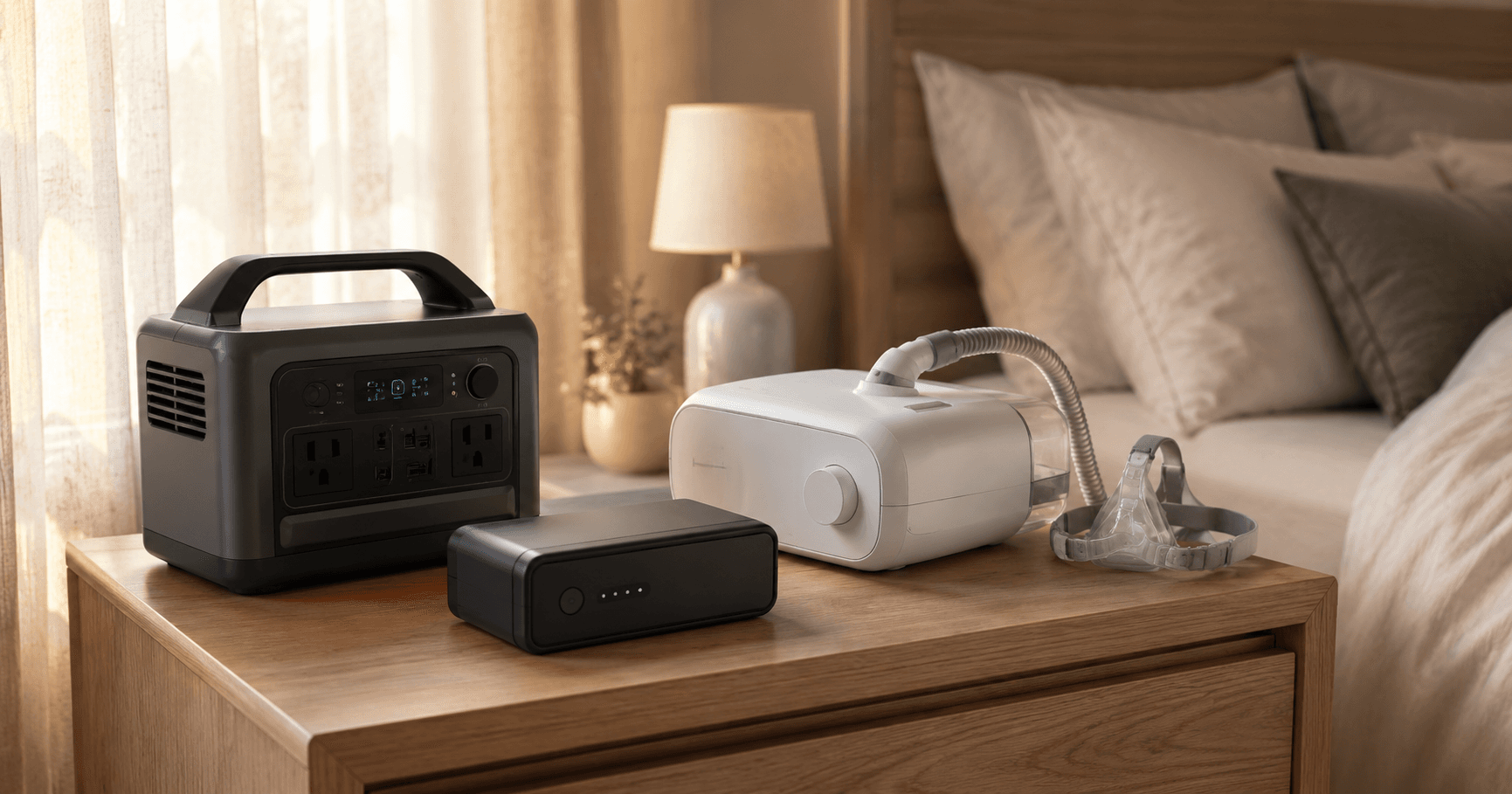
Your CPAP's wattage determines which Goal Zero CPAP battery size you need. Most modern full-size CPAP machines draw roughly 15 to 30 watts without humidification, but that number can spike dramatically when you add heat.
A ResMed AirSense 11 draws roughly 27W at pressure 10 without the humidifier. A DreamStation 2 pulls about 30W under the same conditions. These numbers matter because every watt you save translates directly into extra hours of Goal Zero Yeti CPAP runtime. Check our deep dive on how many watts your CPAP actually draws for your specific machine.
The humidifier changes everything. Heated humidification pushes most machines to 50-90W depending on the moisture and tube temperature settings. At 80W, even a large battery drains in a fraction of the time. The bottom line: if you are running on battery, switch to an HME (heat moisture exchanger) filter instead of the heated humidifier. You will cut your power consumption by 50-70% and double or triple your runtime.
Throughout this guide, we use a conservative 30W as the baseline for CPAP-without-humidifier calculations and 70W for CPAP-with-humidifier. Your actual draw depends on your machine, pressure setting, and leak rate. Use our battery sizing guide to dial in the exact number for your setup.
Goal Zero Yeti Lineup for CPAP — Model-by-Model Breakdown
Goal Zero currently sells five portable power stations in the Yeti line. The 6th-generation models (Yeti 300, 700, and 1500 6G) use LiFePO4 battery chemistry, which is a significant upgrade over the Li-Ion cells in the older 200X and 500X. Here is every model relevant to CPAP users.
Goal Zero Yeti 200X is the lightest option at just 5 lbs with 187Wh of Li-Ion capacity. It is rated for approximately 500 charge cycles before the battery degrades to 80% capacity. At roughly $250, it is the entry-level Yeti and fits in a daypack. However, the limited capacity means it is marginal for a full night of CPAP use.
Goal Zero Yeti 300 uses LiFePO4 chemistry with 297Wh of capacity. It weighs 13.7 lbs, costs around $299, and is rated for 4,000+ charge cycles. It carries an IPX4 water resistance rating, which means it handles rain splashes during camping. The Yeti 300 recharges from 0-100% in just 50 minutes on wall power — the fastest in the lineup relative to its size.
Goal Zero Yeti 500X packs 505Wh of Li-Ion capacity into a 12.9 lb unit for approximately $600. Like the 200X, it is rated for about 500 cycles. The 500X offers strong single-night runtime but the Li-Ion chemistry and higher price make it harder to recommend against the newer LiFePO4 models.
Goal Zero Yeti 700 is the sweet spot for multi-night CPAP camping. It delivers 677Wh of LiFePO4 capacity, weighs 20.3 lbs, and costs approximately $700. It shares the IPX4 rating and 4,000+ cycle lifespan of the Yeti 300. Full recharge takes about 2 hours on wall power.
Goal Zero Yeti 1500 6G is the flagship CPAP-capable power station. At 1,505Wh of LiFePO4 capacity, the Goal Zero Yeti 1500 can power a CPAP for multiple nights without recharging. It weighs 52.75 lbs, costs $1,499.95, and accepts up to 900W of solar input. It recharges from 0-80% in under 1 hour. This is overkill for most CPAP users unless you need extended off-grid runtime or are powering additional devices.
| Model | Chemistry | Capacity | Weight | Price | Cycle Life | Water Rating |
|---|---|---|---|---|---|---|
| Yeti 200X | Li-Ion | 187Wh | 5 lbs | ~$250 | ~500 | None |
| Yeti 300 | LiFePO4 | 297Wh | 13.7 lbs | $299 – $349 | 4,000+ | IPX4 |
| Yeti 500X | Li-Ion | 505Wh | 12.9 lbs | ~$600 | ~500 | None |
| Yeti 700 | LiFePO4 | 677Wh | 20.3 lbs | ~$700 | 4,000+ | IPX4 |
| Yeti 1500 6G | LiFePO4 | 1,505Wh | 52.75 lbs | $1,499.95 | 4,000+ | IPX4 |
The LiFePO4 advantage is substantial. At 4,000+ cycles, a Yeti 300 lasts roughly 10 years of nightly use before dropping to 80% capacity. A Li-Ion Yeti 200X or 500X hits that same threshold in about 1.5 years of daily cycling. For a deeper comparison, read our guide on LiFePO4 vs Li-Ion battery chemistry for CPAP.
Goal Zero CPAP Runtime Tests — How Long Each Yeti Lasts
Runtime depends on three variables: the Yeti's capacity, your CPAP's wattage, and whether you use AC (inverter) or DC (direct) power. AC mode wastes 15-20% of stored energy as heat inside the inverter. DC mode delivers power directly to the CPAP, squeezing more hours from the same battery.
The following table shows estimated Goal Zero Yeti CPAP runtime at 30W draw (no humidifier) and 70W draw (with heated humidifier):
| Model | Capacity | AC Runtime (30W) | DC Runtime (30W) | AC Runtime (70W) | DC Runtime (70W) |
|---|---|---|---|---|---|
| Yeti 200X | 187Wh | ~5 hrs | ~6-7 hrs | ~2 hrs | ~2.5 hrs |
| Yeti 300 | 297Wh | ~8 hrs | ~10-11 hrs | ~3.5 hrs | ~4.5 hrs |
| Yeti 500X | 505Wh | ~14 hrs | ~17 hrs | ~6 hrs | ~7.5 hrs |
| Yeti 700 | 677Wh | ~18-19 hrs | ~23-25 hrs | ~8 hrs | ~10 hrs |
| Yeti 1500 6G | 1,505Wh | ~40+ hrs | ~50+ hrs | ~18 hrs | ~22 hrs |
In short: the Yeti 300 is the minimum for a reliable full night on DC without humidification. The Yeti 200X falls short at around 5 hours on AC, which is not enough for most sleepers who need 7-8 hours.
Notice the humidifier column. At 70W, even the Yeti 700 drops to about 8 hours on AC — barely one night. This is why every Goal Zero CPAP battery guide (including our CPAP battery camping guide) recommends switching to an HME filter when running on battery power.
For campers, the weight-per-night metric helps compare models. The Yeti 300 weighs 13.7 lbs and delivers one night via DC. The Yeti 700 weighs 20.3 lbs and delivers 2-3 nights via DC. That works out to roughly 13.7 lbs/night for the Yeti 300 versus 7-10 lbs/night for the Yeti 700 — making the heavier unit more weight-efficient for multi-night trips.
DC Adapter Trick — Get 30-40% More Runtime
Every Goal Zero Yeti has both a 12V regulated car port (cigarette lighter style) and a 6mm DC output port. Using either of these to power your CPAP directly bypasses the inverter entirely. The result is a 30-40% increase in effective runtime from the same Goal Zero CPAP battery.
Here is how the efficiency math works. When you plug your CPAP into the Yeti's AC outlet, the inverter converts DC battery power to 120V AC. Your CPAP's internal power supply then converts that AC back to DC. Each conversion wastes energy as heat. A DC adapter eliminates both conversion steps.
To use DC power with a Goal Zero Yeti, you need a DC power adapter matched to your CPAP machine. ResMed sells official DC converters for the AirSense 10 and AirSense 11. Third-party options work for DreamStation and other machines. Check our DC power adapter guide for the right cable for your specific CPAP.
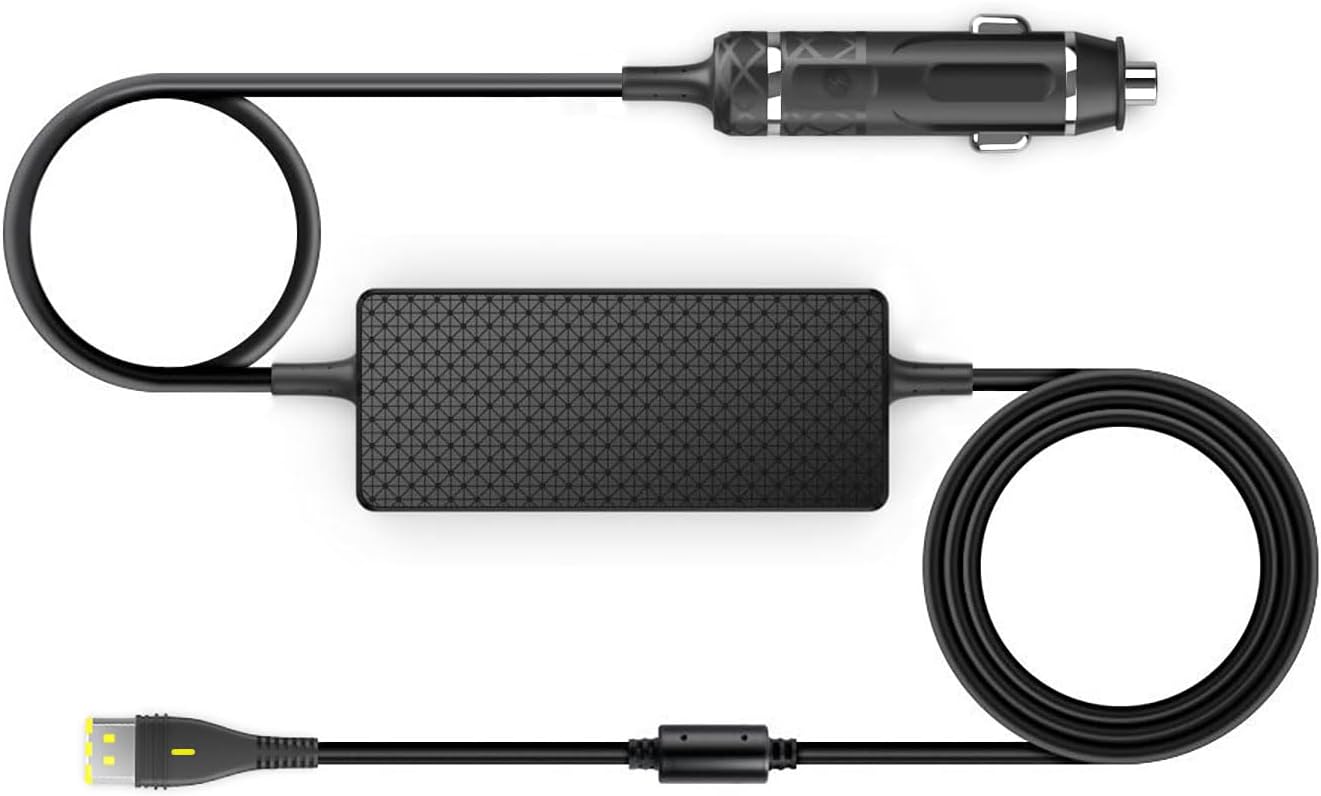
The setup is simple: plug the DC adapter into the Yeti's 12V car port, connect the other end to your CPAP, and turn off the Yeti's AC inverter to save additional standby power. The inverter draws 5-10W just being switched on, even with nothing plugged into the AC outlets.
One important note: running your CPAP on DC power disables the heated humidifier and heated tube on most machines. The humidifier requires AC power. This is actually a benefit when running on battery — as we covered above, the humidifier doubles or triples your power consumption. Use an HME filter instead and enjoy the extended DC runtime.
Solar Recharging for Multi-Day CPAP Camping Trips
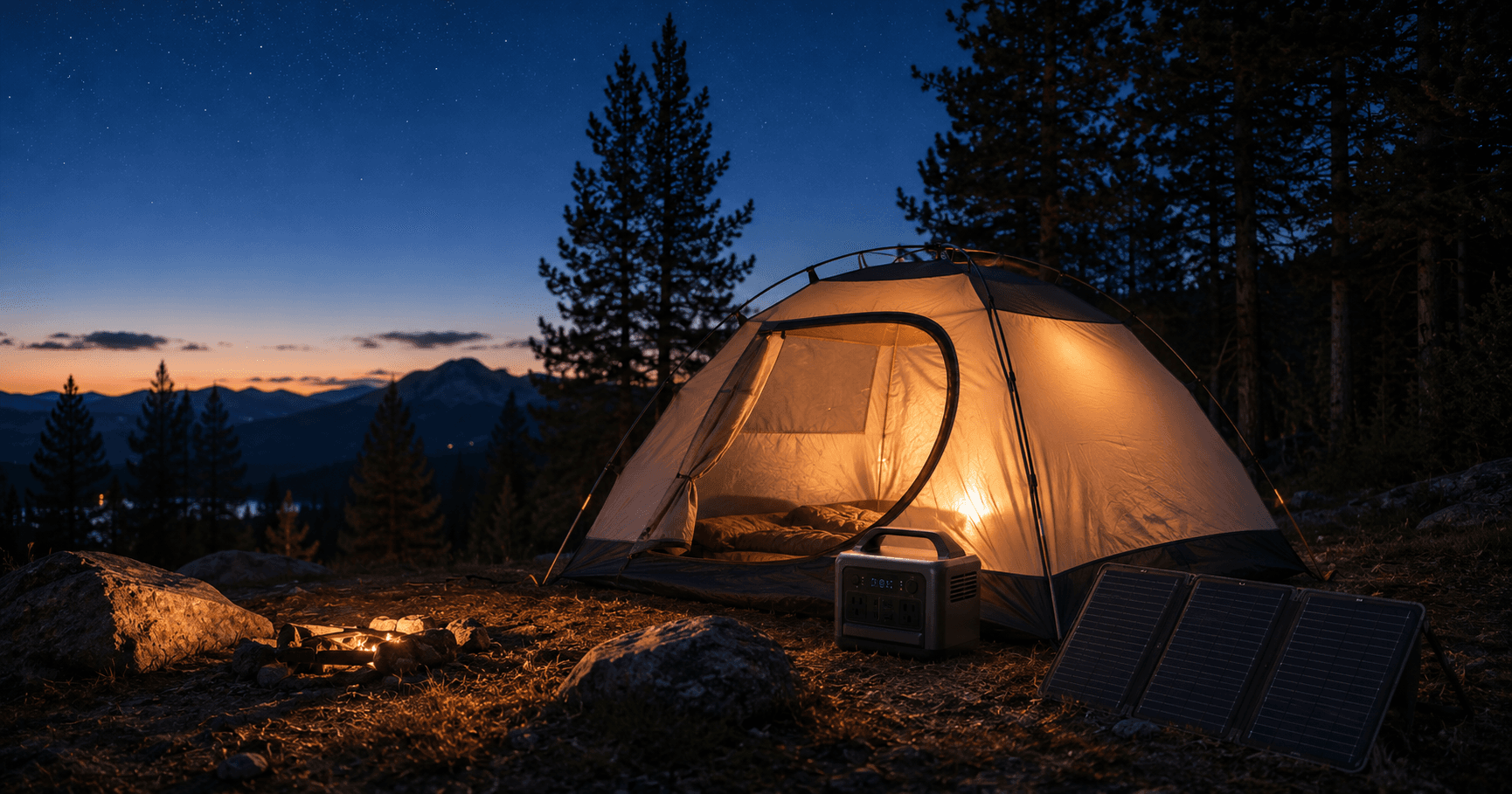
Solar recharging transforms a Goal Zero Yeti from a single-night solution into an indefinite off-grid CPAP power source. The math is straightforward.
A 100W solar panel in typical camping conditions produces about 60-80W of effective output (accounting for angle, clouds, and temperature losses). With 4-5 hours of usable sun per day, that translates to roughly 300-400Wh of charging per day. The Yeti 300 holds 297Wh, so a single 100W panel can fully recharge it in one day of sun — enough to replace one night of CPAP usage.
Goal Zero makes their own Boulder solar panels (100W and 200W), but any portable solar panel with the right connector works. The Yeti models accept 8mm input connectors, and adapters are widely available.

Here is the solar recharge math for each Yeti model with a single 100W panel producing 350Wh per day:
| Model | Capacity | Solar Recharge Time (100W panel) | Nights of CPAP per Day of Sun |
|---|---|---|---|
| Yeti 300 | 297Wh | ~4-5 hrs | ~1 night (DC, 30W) |
| Yeti 700 | 677Wh | ~9-10 hrs | ~1 night (DC, 30W) |
| Yeti 1500 6G | 1,505Wh | ~5-6 hrs (with 900W solar input, multiple panels) | ~1 night (DC, 30W) |
The bottom line: one 100W solar panel paired with a Yeti 300 creates a self-sustaining CPAP system for indefinite camping — as long as you get 4+ hours of sun per day. For cloudy climates or shorter days, step up to a 200W panel or carry a Yeti 700 as a buffer. This is why the Yeti 300 is often called the best Goal Zero for CPAP camping on a budget.

The Yeti 1500 6G supports up to 900W of solar input, which means you can chain multiple panels for rapid recharging. But for most CPAP-only users, 100-200W of solar is plenty. Read our full guide on solar charging your CPAP battery for panel selection, angle optimization, and cloudy-day strategies.
Which Goal Zero Yeti Should You Buy for CPAP?
The right Yeti depends on your use case. Here is a decision matrix based on the most common Goal Zero CPAP battery scenarios.
Emergency home backup (power outages): The Yeti 300 at $299 is the best value. It delivers 10-11 hours on DC at 30W, which covers one full night. LiFePO4 chemistry means it sits in a closet for months and holds its charge. The 50-minute recharge time is a bonus if you get brief windows of power during an outage.
Weekend camping (1-2 nights): The Yeti 300 handles one night on DC. For two nights without solar, step up to the Yeti 700 ($700) which delivers 23-25 hours on DC — enough for two full nights with margin to spare.
Extended off-grid camping (3+ nights): Pair the Yeti 700 with a 100W solar panel. The panel replaces one night of CPAP usage per day of sun, so you can camp indefinitely. The Yeti 700's 20.3 lbs is manageable for car camping but heavy for backpacking.
RV and van life: The Yeti 700 or Yeti 1500 6G, depending on whether you are powering other devices. The 1500 6G at $1,499.95 is expensive but its 1,505Wh capacity and 900W solar input make it a complete mobile power solution.
Ultralight backpacking: The Yeti 200X at 5 lbs is the only Yeti light enough for a pack, but its 5-hour AC runtime is marginal. Consider whether a dedicated CPAP battery might serve you better — see our CPAP battery camping guide for lightweight alternatives.
| Use Case | Recommended Model | Price | Why |
|---|---|---|---|
| Emergency backup | Yeti 300 | $299 – $349 | One full night, fast recharge, LiFePO4 longevity |
| Weekend camping | Yeti 700 | ~$700 | Two nights on DC, IPX4 weather resistance |
| Extended off-grid | Yeti 700 + 100W panel | ~$900-1,000 | Indefinite runtime with solar |
| RV / van life | Yeti 1500 6G | $1,499.95 | Multi-night capacity, 900W solar input |
| Ultralight | Yeti 200X | ~$250 | 5 lbs, marginal runtime — consider alternatives |
Before you commit, see our roundup of the best power stations for CPAP from brands like EcoFlow, Bluetti, and Jackery. Goal Zero's build quality and ecosystem are strong, but competitors sometimes offer more watt-hours per dollar.


Related reading
- How many watts your CPAP actually draws — measure your exact power consumption before buying
- DC power adapter guide — find the right DC cable for your CPAP machine
- LiFePO4 vs Li-Ion battery chemistry — understand why cycle life matters for nightly use
- Solar charging your CPAP battery — panel selection, angles, and cloudy-day math
- CPAP battery camping guide — complete gear list for sleeping on CPAP outdoors
- Battery sizing guide — calculate exactly how many watt-hours you need
- Jackery vs EcoFlow for CPAP — head-to-head brand comparison for CPAP
What to do next
-
Measure your CPAP's actual wattage. Use a Kill-A-Watt meter or check our power consumption guide. Your real-world draw at your pressure setting is the only number that matters for runtime calculations.
-
Decide on DC or AC. If you do not already have a DC adapter for your CPAP, order one before your Yeti arrives. The 30-40% runtime gain is too significant to leave on the table. See our DC adapter guide for compatible cables.
-
Pick your Yeti based on nights, not watts. Count how many consecutive nights you need without recharging. One night: Yeti 300. Two nights: Yeti 700. Three or more: Yeti 700 plus solar, or the Yeti 1500 6G if budget allows.
-
Test before you travel. Run your CPAP on the Yeti for a full night at home before any trip. Verify the runtime, check that your DC adapter works, and confirm your CPAP does not throw any errors on battery power.
-
Consider solar for extended trips. A single 100W panel pays for itself after a few camping trips by eliminating the need for a larger, heavier battery. Even partial sun extends your runtime significantly.