Battery chemistry basics for CPAP users
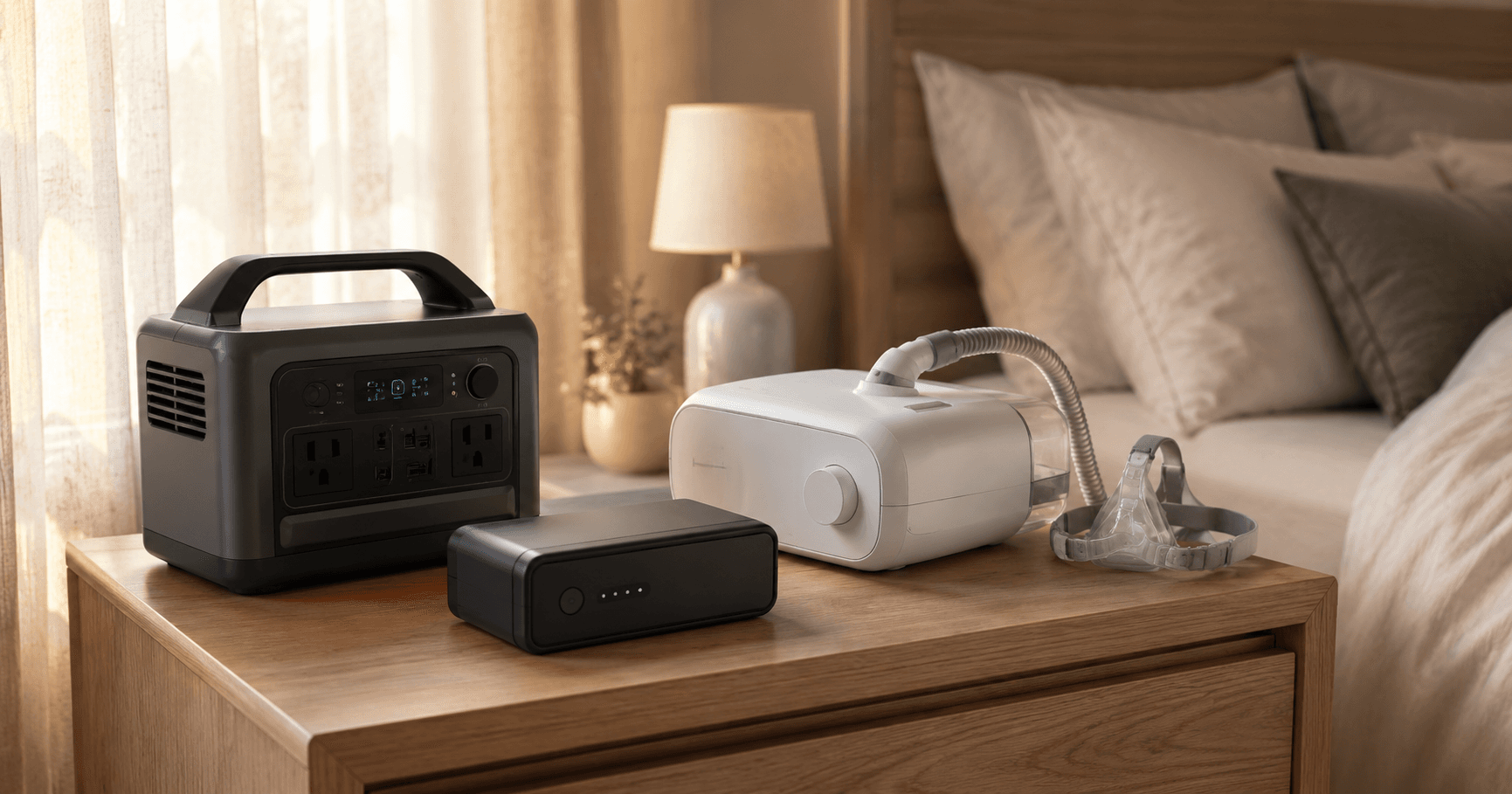
If you have been comparing LiFePO4 vs lithium-ion CPAP options, the single most important thing to understand is that they are not two brands of the same thing — they are two different chemistries with very different lifespans, weights, and safety profiles. A LiFePO4 CPAP battery (lithium iron phosphate, often shortened to LFP) trades a little extra weight for thousands more charge cycles and a much higher tolerance for heat. Standard lithium-ion (the NMC and similar cells used in most dedicated CPAP batteries) trades some of that longevity for the lightest possible pack. Neither is "better" in every situation — the right answer depends on whether you are powering a CPAP at your bedside every night or throwing a battery in a carry-on twice a year.
Both chemistries are technically lithium-based, so people use "lithium-ion" loosely to mean either one. To keep things clear, this guide uses "Li-ion" for the conventional NMC/lithium-cobalt cells that dominate ultralight CPAP batteries, and "LiFePO4" or "LFP" for the iron-phosphate chemistry found in most modern power stations.
The differences come down to the cathode material. LiFePO4 cells use an iron-phosphate cathode that is chemically stable and resists breaking down under heat or overcharge. Conventional Li-ion cells use cobalt-rich cathodes that pack more energy into less space and weight but become unstable at lower temperatures, which is the root cause of the rare-but-real thermal runaway events you read about. For a device that sits inches from your face all night, that stability difference is not academic — it is the main reason power-station makers moved to LFP. If safety is your top concern, our CPAP battery safety guide covers airline rules, thermal risk, and bedside placement in more depth.
LiFePO4 advantages for CPAP

Anker SOLIX C300 Portable Power Station (288Wh LiFePO4, 300W AC)
$329.99
Check price on Amazon
LiFePO4 wins on the two things that matter most for home backup: longevity and safety.
Cycle life is the headline number. A quality LiFePO4 pack is rated for roughly 2,000 to 4,000+ full charge cycles before it drops to 80% of its original capacity — and many manufacturers, including Bluetti and EcoFlow, publish ratings in the 3,000 to 4,000 range. Standard Li-ion typically delivers only 300 to 500 cycles to that same threshold. In plain terms: if you cycle a battery every night, a 500-cycle Li-ion pack is meaningfully degraded in under two years, while a 3,000-cycle LFP pack can run nightly for the better part of a decade. That is why power stations such as the Anker SOLIX C300 (rated for 3,000 cycles) and EcoFlow RIVER 2 are built around LFP — they are designed to be charged and discharged constantly.
Thermal stability makes it safer for the bedroom. LiFePO4 has a much higher thermal runaway threshold than cobalt-based Li-ion. It is far less likely to vent, ignite, or cascade if it is overcharged, punctured, or left in a warm room. For a battery you keep on a nightstand and leave plugged in around the clock, that margin is worth a lot.
Flatter voltage curve. LFP holds its voltage steadier across most of its discharge, so your CPAP and especially its heated humidifier see consistent power until the pack is nearly empty, rather than tapering off early.
Lower cost per cycle. Upfront prices for LFP and Li-ion units are now broadly similar, but because LFP lasts 4-8x longer, the cost spread over its lifetime is dramatically lower. If you want a power station built on this chemistry without overspending, see our roundup of the best power stations under $200 for CPAP.
The main trade-offs: LFP packs are heavier and bulkier for the same watt-hours, and they lose a little usable capacity in very cold weather (though they tolerate cold storage well and self-discharge slowly, often only a few percent per month).
Li-Ion advantages for CPAP
Conventional lithium-ion is not obsolete — it still owns the use case it was made for: travel.
Higher energy density. Li-ion stores roughly 20-30% more energy per pound and per cubic inch than LiFePO4. When every ounce in your bag counts, that difference is the whole game. It is exactly why dedicated, slim CPAP batteries designed to slip into a carry-on use Li-ion rather than LFP.
Lighter, smaller packs. Most purpose-built CPAP batteries — the Medistrom Pilot-24, the EASYLONGER ES270, and the Freedom V2 among them — use Li-ion specifically to stay compact and travel-friendly. You can power a typical CPAP for a night or two from something the size of a thick paperback, which an equivalent LFP pack simply cannot match.
Plenty of cycle life for occasional use. The 300-500 cycle rating sounds short next to LFP, but if you only use the battery for camping trips, flights, and the occasional outage, you may take a decade to exhaust those cycles anyway. For intermittent backup, Li-ion's lower longevity rarely becomes the limiting factor.
The cautions are the flip side of the LFP advantages: shorter overall lifespan if used nightly, a lower thermal-runaway threshold, and faster capacity fade if frequently charged to 100% or stored hot. If you plan to run a battery every single night, those factors push you toward LFP. If you are sizing a pack for a specific machine and pressure, our CPAP battery sizing guide walks through the watt-hour math for both chemistries.
Side-by-side comparison table
| Factor | LiFePO4 (LFP) | Standard Li-Ion (NMC) |
|---|---|---|
| Charge cycles (to 80%) | ~2,000-4,000+ | ~300-500 |
| Energy density / weight | Lower (~20-30% heavier per Wh) | Higher (lightest per Wh) |
| Safety / thermal stability | Excellent — high runaway threshold | Good, but lower threshold |
| Voltage under load | Flat, steady to near-empty | Tapers earlier |
| Cold-weather performance | Slight capacity loss; stores well | Slightly better in cold |
| Self-discharge | Very low (~few % per month) | Low to moderate |
| Upfront cost | Similar | Similar |
| Cost per cycle | Far lower (lasts 4-8x longer) | Higher |
| Best use case | Nightly home/bedside backup | Ultralight travel & flights |
| Typical products | Power stations (Anker SOLIX C300, EcoFlow RIVER 2) | Dedicated CPAP batteries (Pilot-24, EASYLONGER ES270) |
Which chemistry to choose for your situation
Match the chemistry to how you will actually use the battery.
Choose LiFePO4 if you want nightly or whole-home backup. If your goal is power-outage insurance that lives by your bed and runs every night, LFP is the clear pick. The huge cycle life means it will not wear out in two years, the thermal stability is reassuring for bedside use, and the steady voltage keeps a heated humidifier happy. A LiFePO4 power station is also more flexible — it can charge phones, run a CPAP for multiple nights, and survive years of use. Browse our best CPAP backup batteries list for vetted LFP options.
Choose Li-ion if travel weight is your priority. Flying somewhere and need a battery that meets airline watt-hour limits without weighing down your carry-on? A dedicated Li-ion CPAP battery like the Pilot-24 or EASYLONGER ES270 is purpose-built for exactly that. The shorter cycle life rarely matters for a battery you use a handful of times a year.
Consider owning both. Many CPAP users keep an LFP power station at home for outages and a slim Li-ion pack for trips. If you are deciding between a single power station versus a UPS or a dedicated battery, our breakdown of UPS vs CPAP battery vs power station compares all three. Cross-shopping the two biggest LFP brands? See Jackery vs EcoFlow for CPAP.
If you have basic battery skills and want maximum cost-per-cycle value, an LFP cell is also the safest chemistry for a homemade build — see our DIY CPAP battery guide before you start, and read the safety guide first.
Related reading
- Best power stations under $200 for CPAP
- Bluetti for CPAP: which model fits your machine
- CPAP battery safety: airline rules and bedside risk
- CPAP battery sizing guide
What to do next
Decide how you will use the battery first, then let the chemistry follow. If it lives by your bed for outages, go LiFePO4 for the cycle life and safety; if it rides in your carry-on, go Li-ion for the weight savings. When you are ready to pick a specific model, check our best CPAP backup batteries guide for side-by-side comparisons matched to real CPAP machines.