Why the AirCurve Needs a Different Battery Than Standard CPAP
Choosing the best battery for ResMed AirCurve machines requires understanding one key fact: the AirCurve is a bilevel (BiPAP) machine, and it draws significantly more power than a standard single-pressure CPAP. Where an AirSense 10 or 11 averages 10-20W, an AirCurve can pull 25-40W without humidification and up to 90W with a heated tube running. That difference changes every battery calculation.
Most dedicated CPAP batteries were designed for single-pressure machines. Their 50-100 Wh capacities deliver a full night on an AirSense but only 2-4 hours on an AirCurve. If you need a reliable ResMed AirCurve 10 battery backup, you cannot just grab any CPAP battery off the shelf. Worse, some cannot supply enough peak wattage for the AirCurve ST and ASV models, which maintain a backup respiratory rate that creates higher instantaneous power demands.
The bottom line: you need to match your AirCurve model specifically, not just the ResMed brand. A battery that works perfectly with the AirCurve 10 VAuto may fail entirely with the AirCurve 10 ST. This guide breaks down exactly which batteries work with which models, how long they last, and where the compatibility traps are.
For general BiPAP battery backup ResMed guidance, see our BiPAP battery backup guide.
AirCurve Power Consumption by Model
Understanding your machine's power draw is the first step to choosing the right battery. All AirCurve models use a 24V DC power supply rated at 90W, but actual consumption varies widely by model and settings.
AirCurve 10 VAuto: 25-35W without humidification, 55-75W with the humidifier, and 70-90W with both the humidifier and heated tube enabled. The VAuto is the most efficient AirCurve because it only delivers bilevel pressure on demand.
AirCurve 10 ST and ASV: 30-40W without humidification, 60-90W with the humidifier. These models draw more power because they maintain a backup respiratory rate. The ASV continuously adjusts pressure support breath-by-breath, creating higher average and peak loads.
AirCurve 11 VAuto: 20-35W without humidification, 50-80W with the humidifier. If you are shopping for a ResMed AirCurve 11 VAuto battery, the newer platform is slightly more efficient than the AirCurve 10 series, though the difference is modest.
In short: plan for 30W average without humidification and 65W average with it. For detailed calculations, try our CPAP battery runtime calculator.
The humidifier is the single biggest factor in battery runtime. Our humidifier battery drain deep-dive covers strategies to reduce this load without sacrificing comfort.
Best Battery for ResMed AirCurve: Dedicated 24V DC Options
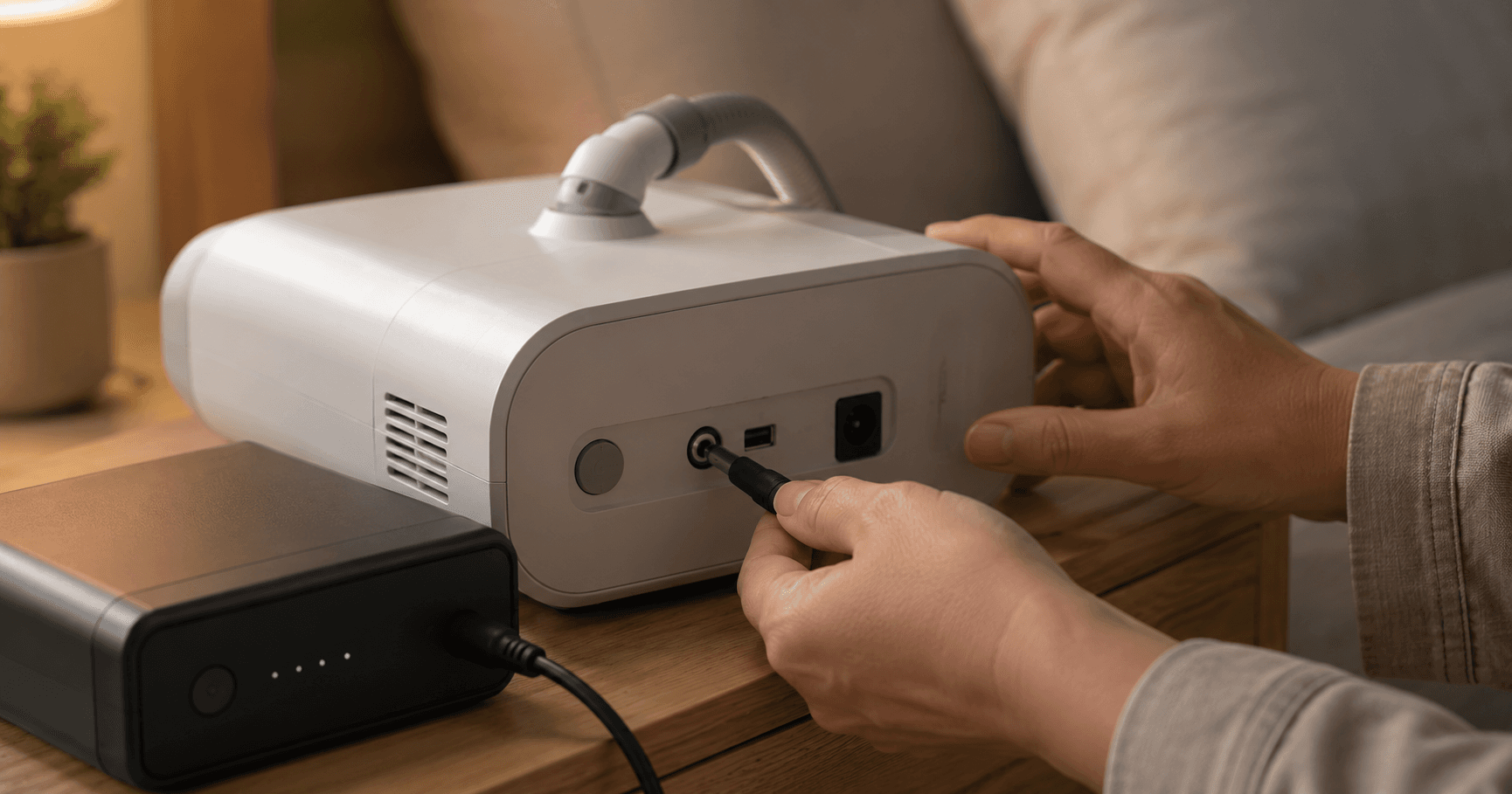
Dedicated DC batteries connect directly to your AirCurve, bypassing the wall adapter. This avoids the roughly 15% energy loss from AC inverter conversion, giving you more runtime per watt-hour. The catch: not every DC battery works with every AirCurve model.
Medistrom Pilot-24 Lite
The Pilot-24 Lite is the most popular dedicated CPAP battery and works well with the AirCurve 10 VAuto and AirCurve 11 VAuto. At 95 Wh, expect around 3 hours of runtime without humidification at typical pressures.
Critical warning: The Pilot-24 Lite does not support the AirCurve ST or ASV models. Its power output cannot handle the higher peak demands of these machines.
For the AirCurve 11, you need the separate cable kit sold by Sleeplay, as the connector is different from the AirCurve 10.

EASYLONGER ES270 CPAP Battery
The EASYLONGER ES270 packs 99.9 Wh into a 1.3 lb pack with a selectable 12V, 19V, or 24V output (24V at 3.5A) and includes CPAP cables for the AirCurve 10 and 11. At roughly 30W without humidification, expect about 2.8-3 hours on an AirCurve 10 VAuto. The maker does not claim ST or ASV support, so treat it as a VAuto battery. At $139.99 it costs well under half the Pilot-24 Lite, and it adds a 100W USB-C port. (It replaces the Freedom V2 we previously listed here, which is currently unavailable on Amazon.)

EASYLONGER ES270 CPAP Battery (99.9Wh, FAA Carry-On)
$139.99
Check price on AmazonBluetti X30 CPAP Battery
The Bluetti X30 is a dedicated 297 Wh CPAP battery with DC output cables for ResMed machines. Its far larger capacity and higher power output handle every AirCurve 10 model — including the power-hungry ST and ASV — where the small 95-100 Wh DC packs fall short. At roughly 30W draw without humidification, expect around 8-9 hours of runtime, enough for a full night.
If you are evaluating AirCurve ST battery options and want a DC-direct solution that skips the inverter, the X30 is the strongest pick. It typically runs $279 – $359.

Anker SOLIX C300 DC
The SOLIX C300 DC is a crossover product: a 288 Wh portable power station with a native 24V DC output port. This gives you DC efficiency in a larger-capacity package. At 30W average draw, expect 8-9 hours of runtime — enough for a full night without humidification.
It works with the AirCurve 10 VAuto, AirCurve 11, and likely the ST/ASV models thanks to its higher power output. You need the correct 24V DC adapter cable for your specific AirCurve model.

Best Portable Power Stations for AirCurve
If you want a battery that works with any AirCurve model — VAuto, ST, ASV, AirCurve 10 or 11 — a portable power station with a pure sine wave AC outlet is the simplest path. You plug in the stock ResMed wall adapter and go. No compatibility questions, no special cables.
The trade-off is roughly 15% energy loss from the DC-to-AC-to-DC conversion. For a detailed breakdown of when DC beats AC, see our DC power adapter guide.
Best for Overnight Travel
The EcoFlow RIVER 2 packs 256 Wh into a 7.7 lb package. On an AirCurve 10 VAuto without humidification, that translates to roughly 7 hours of runtime via AC — enough for most nights.

The Anker SOLIX C300 is the AC sibling of the C300 DC above: 288 Wh of LiFePO4, three pure sine AC outlets (300W), two 140W USB-C ports, and a sub-10ms UPS mode for home backup. Expect roughly 6.7-7.7 hours on an AirCurve 10 VAuto via AC without humidification. It weighs 9.1 lb and costs $329.99, so it is not the budget pick, but it is the more capable all-rounder.

Anker SOLIX C300 Portable Power Station (288Wh LiFePO4, 300W AC)
$329.99
Check price on AmazonBest for Multi-Night Trips
The Jackery Explorer 500 v2 offers 512 Wh — roughly 14 hours without humidification. That is comfortable margin for two nights on a single charge when you disable the humidifier.

Best for Extended Off-Grid or Emergency Backup
The EcoFlow DELTA 3 at 1,024 Wh (LiFePO4, sub-10ms UPS, 27.6 lb) provides roughly 24-27 hours of AirCurve runtime via AC without humidification — about three nights. With the humidifier running, expect 11-12.6 hours, or about a night and a half.

The BLUETTI Elite 100 V2 is the same size class at 1,024 Wh LiFePO4, with 1800W of pure sine AC and a ≤10ms UPS mode. Via AC, expect roughly 24-27 hours on an AirCurve without humidification, or 11-12 hours with the humidifier running. At 25.3 lb it is a home-backup unit, not a camping pack.

BLUETTI Elite 100 V2 Portable Power Station (1024Wh LiFePO4, 1800W)
$499 – $899
Check price on AmazonThe BLUETTI Elite 200 V2 is the heavy-duty option if you need to power other medical devices alongside your AirCurve during an extended outage. Its 2,073.6 Wh LiFePO4 battery and 2600W inverter give roughly 48-55 hours of AirCurve runtime via AC without humidification. It is not expandable with add-on batteries, and it weighs 53.4 lb.

BLUETTI Elite 200 V2 Portable Power Station (2073.6Wh LiFePO4, 2600W)
$899.00
Check price on AmazonAirCurve Battery Runtime Comparison Table
All runtimes below are estimates for the AirCurve 10 VAuto at approximately 30W average draw without humidification. With the humidifier enabled (roughly 65W average), halve these numbers.
| Battery | Capacity | Connection | Est. Runtime (no hum) | Est. Runtime (w/ hum) | Weight |
|---|---|---|---|---|---|
| Medistrom Pilot-24 Lite | 95 Wh | DC | ~3 hrs | ~1.5 hrs | 1.7 lbs |
| EASYLONGER ES270 | 99.9 Wh | DC | ~2.8-3 hrs | ~1.3 hrs | 1.3 lbs |
| Bluetti X30 | 297 Wh | DC | ~8-9 hrs | ~4 hrs | ~8 lbs |
| Anker SOLIX C300 DC | 288 Wh | DC | ~8-9 hrs | ~4 hrs | 7.5 lbs |
| EcoFlow RIVER 2 | 256 Wh | AC | ~7 hrs | ~3.3 hrs | 7.7 lbs |
| Anker SOLIX C300 | 288 Wh | AC | ~6.7-7.7 hrs | ~3.1-3.5 hrs | 9.1 lbs |
| Jackery Explorer 500 v2 | 512 Wh | AC | ~14 hrs | ~6.7 hrs | 13.3 lbs |
| EcoFlow DELTA 3 | 1,024 Wh | AC | ~24-27 hrs | ~11-12.6 hrs | 27.6 lbs |
| BLUETTI Elite 100 V2 | 1,024 Wh | AC | ~24-27 hrs | ~11-12.6 hrs | 25.3 lbs |
DC batteries show higher efficiency because they skip the inverter conversion step. For sizing guidance beyond this table, read our CPAP battery sizing guide.
DC vs AC: Which Is Better for Your AirCurve?
Direct DC connection is more efficient and produces a lighter, quieter setup — but it is not always an option. Here is how to decide.
Choose DC if: You run an AirCurve 10 VAuto or AirCurve 11 VAuto, you do not need the humidifier on battery, and you value portability. The ES270 (1.3 lbs) and Pilot-24 Lite (1.7 lbs) are the lightest options by far.
Choose AC if: You run an AirCurve ST or ASV (the Bluetti X30 is the DC exception), you want to use the humidifier on battery, or you want one battery that works with any machine. AC power stations also charge your phone, laptop, and other devices.
Choose the Anker SOLIX C300 DC if: You want DC efficiency with enough capacity for a full night. It bridges the gap between the small dedicated batteries and bulky power stations.
The 15% efficiency loss on AC sounds significant, but in practice it means a 300 Wh AC power station performs like a 255 Wh DC battery. When AC power stations often come in at 256-500+ Wh, the raw capacity advantage usually outweighs the conversion loss.
For a full comparison of DC adapters across brands, see our CPAP DC power adapter guide.
Tips to Maximize Battery Life with Your AirCurve
Every watt you save extends your runtime. These strategies are especially impactful on bilevel machines where the baseline draw is already high.
Turn off the humidifier. This is the single biggest lever. Going from heated humidification to no humidification roughly doubles your battery runtime. If dry air bothers you, use an HME (heat and moisture exchanger) filter or a nasal saline spray before bed.
Lower the heated tube temperature. If you cannot go fully dry, dropping the tube temperature from the default setting to the minimum reduces power draw by 10-20W. Even a partial reduction helps significantly on a long night.
Reduce pressure if clinically appropriate. Lower EPAP and IPAP settings mean the motor works less. Only adjust pressures with your doctor's guidance — therapy effectiveness comes first.
Use DC when possible. Switching from AC to DC saves roughly 15% of your battery capacity. On a 300 Wh battery at 30W draw, that is an extra hour of runtime.
Keep your battery at room temperature. Lithium batteries lose capacity in cold weather. In winter camping scenarios, keep the battery inside your sleeping bag or insulated case. A battery at 0 degrees C can lose 20-30% of its effective capacity.
Pre-cool or pre-heat your machine on wall power. If your AirCurve has a ramp feature, start the ramp period while plugged in, then switch to battery just before sleep.
Flying with Your AirCurve Battery (FAA Rules)
You can bring your AirCurve and its battery on any flight, but FAA regulations set clear limits on lithium battery capacity.
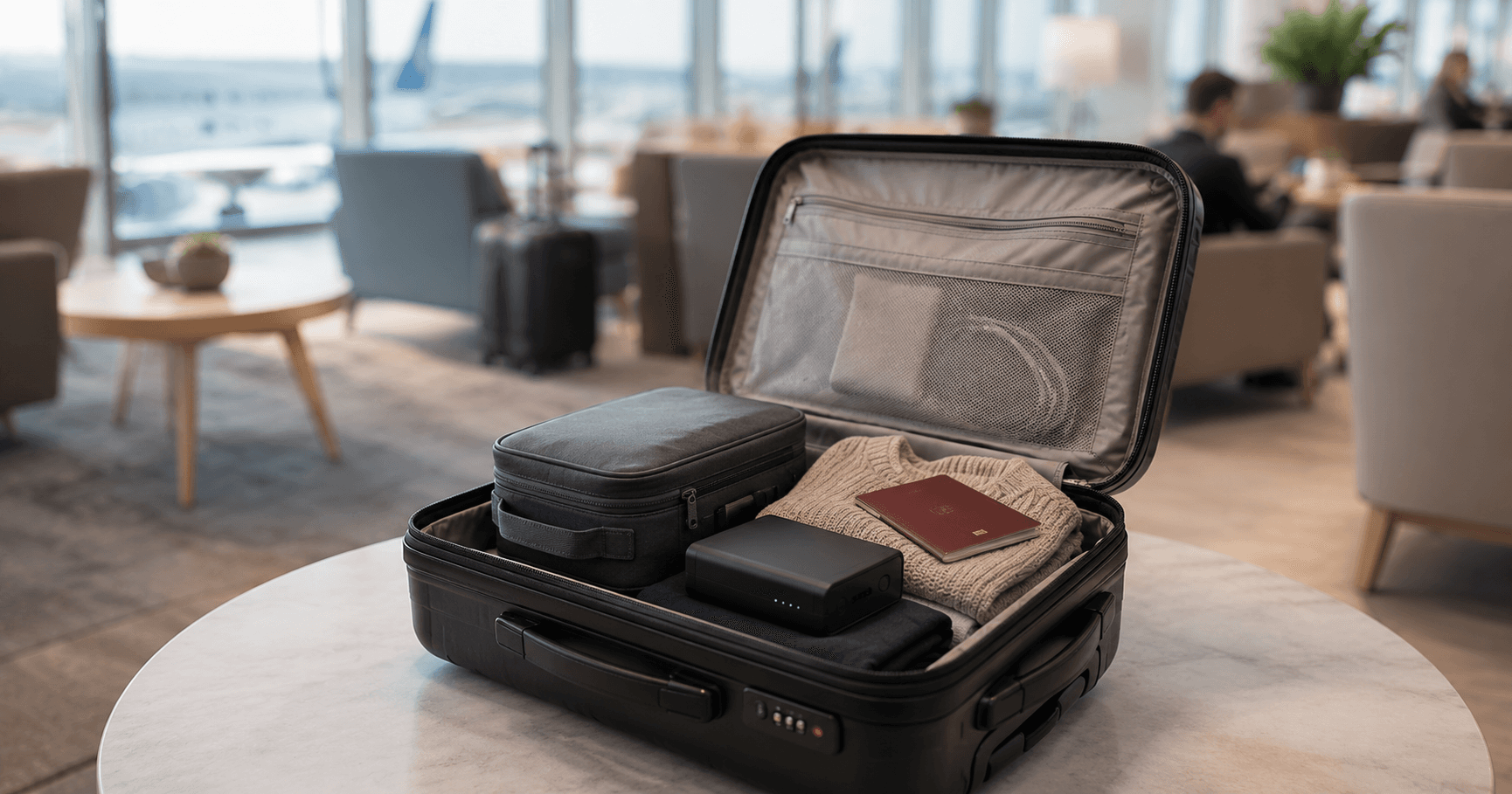
Under 100 Wh: No airline approval needed. Carry-on only — lithium batteries are never allowed in checked luggage. The Medistrom Pilot-24 Lite (95 Wh) and EASYLONGER ES270 (99.9 Wh) both fall under this limit.
100-160 Wh: Allowed in carry-on with airline approval. Most airlines grant this routinely, but you should confirm before your flight. The larger power stations in the 150+ Wh range need this approval.
Over 160 Wh: Not allowed on passenger aircraft. The EcoFlow RIVER 2 (256 Wh), Jackery Explorer 500 v2 (512 Wh), and all other large power stations are banned from flights.
The AirCurve machine itself is classified as a medical device and does not count toward your carry-on limit under TSA and most airline policies. Always carry a copy of your prescription.
For the complete rundown on TSA screening, international rules, and packing tips, read our flying with a CPAP battery guide.
In short: if you fly frequently, a dedicated DC battery under 100 Wh is your only hassle-free option. Plan to skip the humidifier on flights and charge the battery at your destination for multi-night trips.
Related reading
- BiPAP Battery Backup: Complete Guide
- CPAP Battery Compatibility Guide
- Best Battery for ResMed AirSense 10
- Best Battery for ResMed AirSense 11
- Best CPAP Backup Batteries
What to do next
If you run an AirCurve 10 VAuto and want the lightest travel option, start with the Medistrom Pilot-24 Lite and skip the humidifier on battery nights.
If you run an AirCurve ST or ASV, your safest DC choice is the Bluetti X30. For longer runtime, grab an AC power station like the EcoFlow RIVER 2 or Anker SOLIX C300.
If you need a full night with humidification, look at the Anker SOLIX C300 DC for DC efficiency or the Jackery Explorer 500 for raw AC capacity.
Not sure how much capacity you need? Use our battery sizing calculator to plug in your exact AirCurve model and settings.