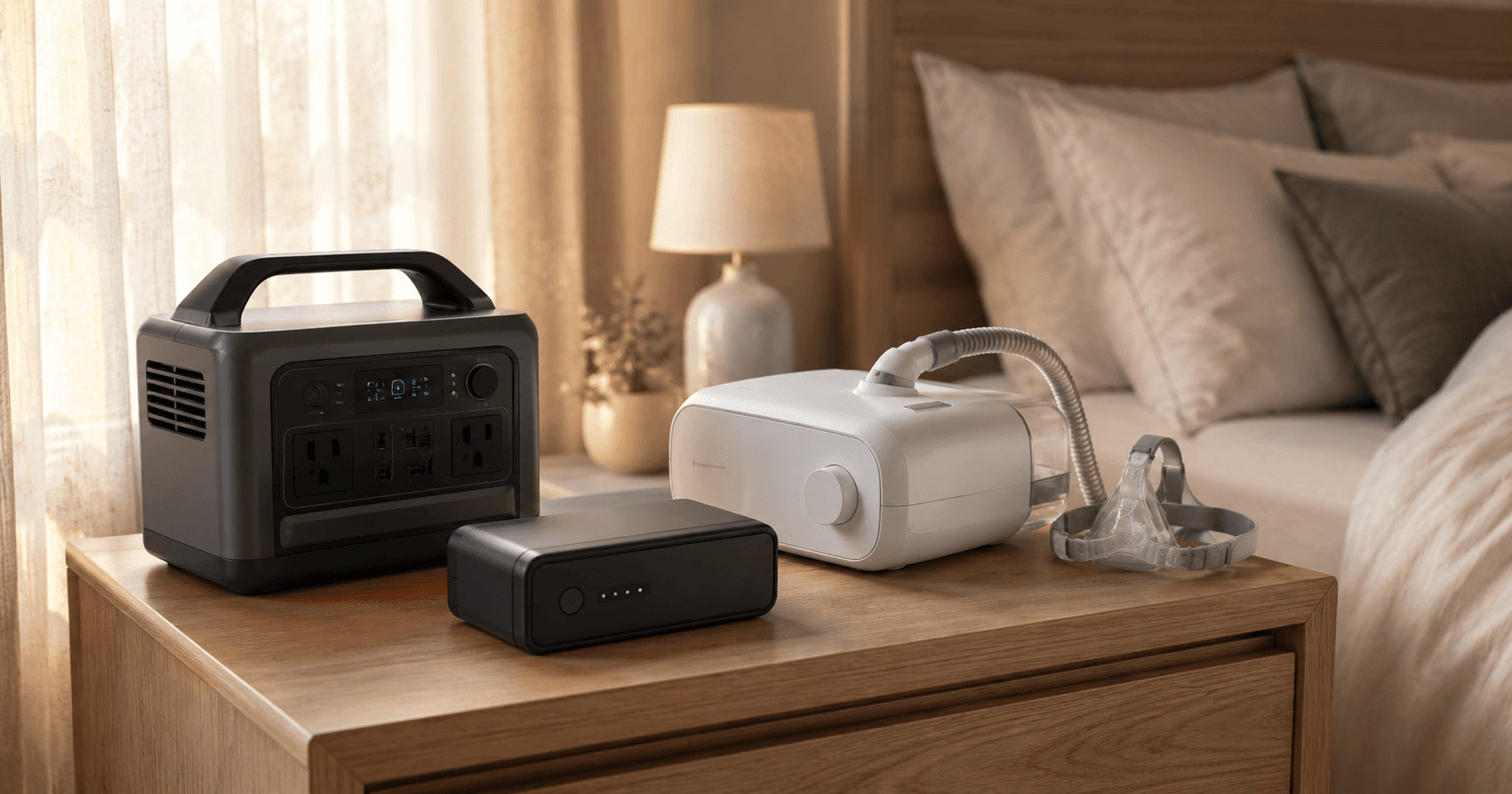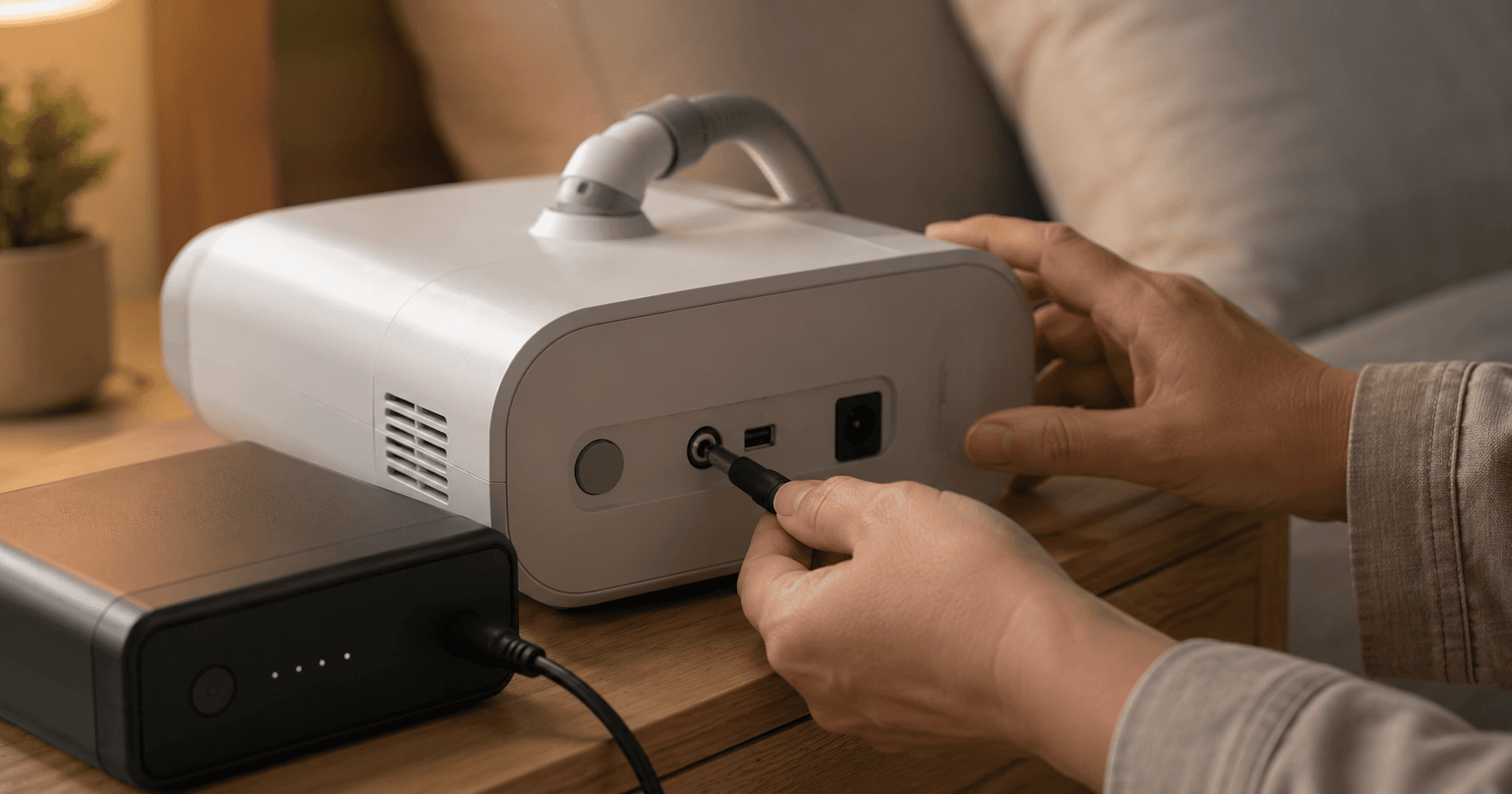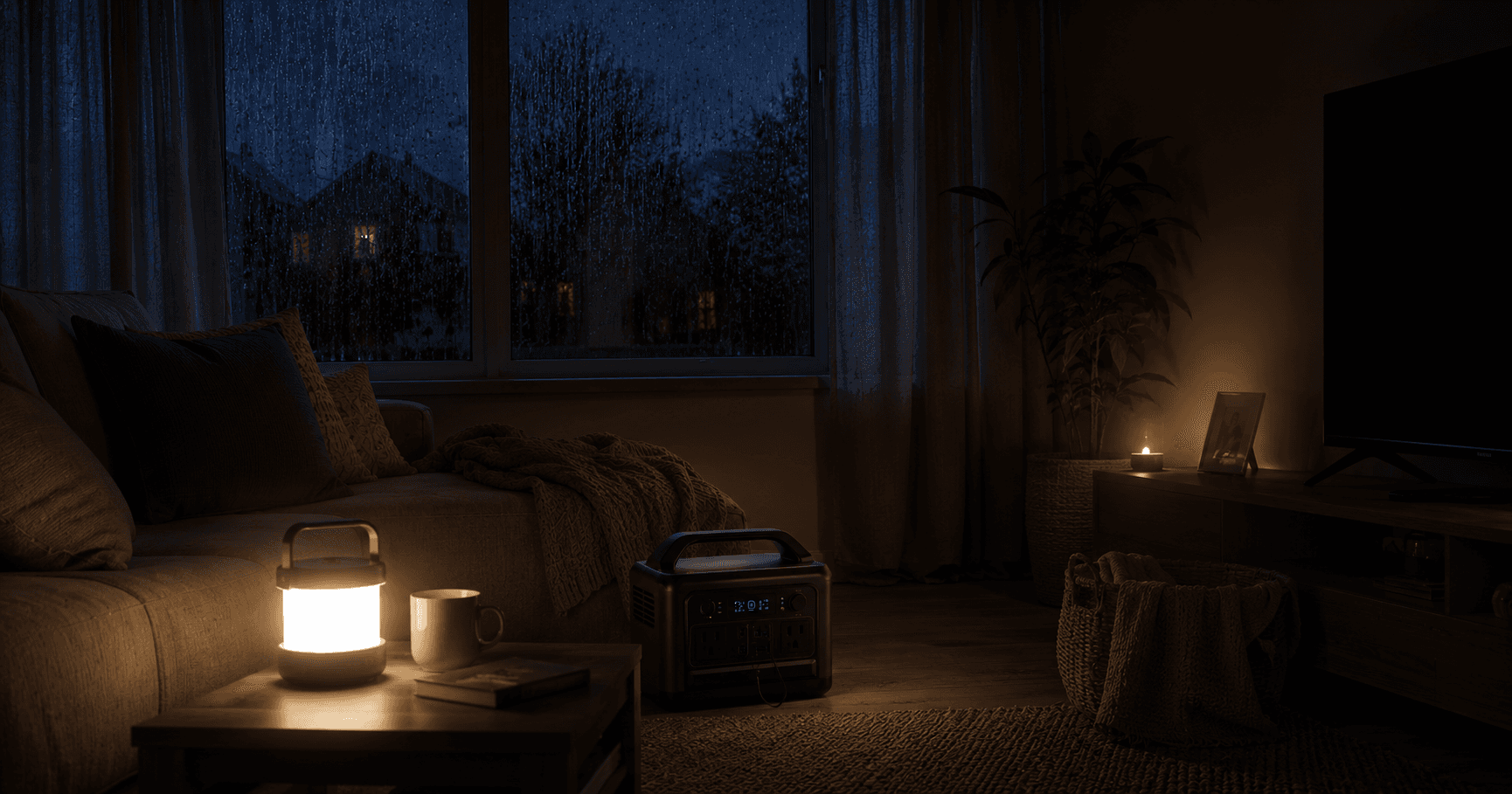
Power outages at night are more common than people expect — storms, grid failures, and rolling blackouts don't wait until morning. If you rely on CPAP therapy, one night without it isn't just uncomfortable. It's a health issue.
Here's how to stay covered.
Three options for CPAP backup during power outages
Option 1: UPS (Uninterruptible Power Supply)

A UPS is a device that sits between your wall outlet and your CPAP. When power cuts out, it instantly switches to battery — no interruption, no restarting your machine.
The catch: standard home UPS units aren't built for all-night CPAP use. A 600VA UPS (common household size) will run a CPAP for 30 to 90 minutes depending on your pressure settings and whether the humidifier is on.
When a UPS makes sense: if your area has brief, frequent outages (brownouts, flickering power) and you want seamless auto-switching without doing anything manually.
Best UPS options for CPAP:
- Bluetti Elite 30 V2: 288Wh bedside power station with a 600W AC outlet and 10ms UPS pass-through. Around 8-10 hours of CPAP runtime, automatic switchover. About $199 – $249.
- APC BE600M1 (600VA): Runs most CPAPs 45-90 min without humidifier. About $80. Good for short outages.
- CyberPower CP1500PFCLCD (1500VA): More capacity, runs CPAPs 3-4 hours. About $200. Better for extended outages.

Bluetti Elite 30 V2 Portable Power Station (288Wh, 600W LiFePO4)
$249.99
Check price on AmazonUPS limitations: they're heavy, not portable, and still won't get most people through a full night at typical capacity.
Option 2: CPAP-specific batteries
Batteries designed specifically for CPAP use. They're lightweight, often FAA-carry-on approved, and some include automatic transfer features.

Best options:
- Medistrom Pilot-24 Lite: Works with most ResMed and Philips machines. About 1.4 lbs, 95Wh, runs 8-16 hours without humidifier. About $329 – $349. Has automatic transfer capability. The most CPAP-native option for ResMed and Philips owners (premium, not the cheapest).
- Anker SOLIX C300: 288Wh LiFePO4 with 300W pure sine AC and a 12V car socket; runs an AirSense 11 with the humidifier off for roughly 11-14 hours and powers other devices too. About $330.
- ResMed Power Station II: Made for ResMed machines specifically. Built-in 12V DC output, no inverter needed. About $300.
Best for: anyone who wants a dedicated CPAP backup that's easy to store, travels well, and lasts the night.
Option 3: Portable power stations

General-purpose batteries with AC outlets, USB, and 12V ports. They run your CPAP plus anything else you need during an outage — phone, lights, a fan.
Best options by budget:
| Station | Capacity | CPAP runtime (no humidifier) | Price |
|---|---|---|---|
| EcoFlow River 2 | 256Wh | 12-20 hours | $179 – $239 |
| Jackery Explorer 300 Plus | 288Wh | 14-22 hours | ~$250 |
| Bluetti EB3A | 268Wh | 12-20 hours | ~$200 |
| EcoFlow River 2 Pro | 768Wh | 3-5 nights | ~$500 |
Best for: households that want one solution for CPAP backup AND general emergency power. Slightly heavier and larger than CPAP-specific batteries, but more versatile.
The humidifier decision
This is the single biggest factor in how long your backup lasts.
A CPAP with a heated humidifier draws roughly 30-70 watts. The same CPAP without the humidifier draws about 15-30 watts. That's a 2-3x difference in power consumption.
During a power outage, turn off the heated humidifier and use a cold pass-over configuration if you need moisture. You'll multiply your backup runtime dramatically.
Most modern CPAPs (ResMed AirSense 10/11, Philips DreamStation) let you disable the humidifier in settings. It takes 30 seconds.
What to set up before an outage hits
Step 1: Know your CPAP's power draw. Check the label on the back of the machine or the manual. Look for watts or amps. If you see amps, multiply by 12 (for 12V DC) or 120 (for AC) to get watts.
Step 2: Calculate your runtime needs. How many nights do you need coverage? Most people want one full night minimum, two nights to feel secure.
Step 3: Pick your solution.
- Short outages only → UPS or small CPAP battery (100Wh)
- One full night → CPAP battery or 250-300Wh power station
- Multi-night coverage → 500Wh+ power station
- A week or more without power (hurricanes, ice storms, wildfire shutoffs) → a 2–4 kWh station or solar bundle; see our best solar generator for CPAP picks
Step 4: Test it before you need it. Plug your CPAP into your backup solution and run it for a night while connected to wall power. Confirm runtime meets your needs before a real outage.
Step 5: Keep it charged. An uncharged backup is useless. Most power stations hold their charge for 6-12 months. Top them off every few months.
Bottom line
For most CPAP users, a 250-300Wh portable power station covers everything — one to two nights of backup, works with any machine, and doubles as emergency power for phones and lights.
If you travel frequently and want something compact and CPAP-optimized, the Medistrom Pilot-24 Lite is the most purpose-built option on the market.
Whatever you choose, set it up and test it now. The night of an outage isn't the time to figure out cables.
Related reading
- CPAP Power Outage Guide — complete outage playbook
- UPS vs CPAP Battery vs Power Station — detailed head-to-head
- How Long Will a CPAP Battery Last During a Power Outage? — runtime tables
- CPAP Hurricane Preparedness — extended outage planning
- Best Solar Generator for CPAP — 2–4 kWh stations and solar bundles for multi-day outages
- Best CPAP Backup Batteries — top battery picks
What to do next
Decide which of the three backup approaches fits your outage profile, buy it this week, and test it before the next storm. A tested setup that sits in a drawer beats a perfect setup you never plugged in.
- Measure your CPAP's actual wattage with a kill-a-watt meter
- Pick a battery using our sizing guide
- Do a full-night dry run so there are no surprises during a real outage
Affiliate disclosure
This site may include affiliate links. If you buy through links, we may earn a commission at no extra cost to you. We only recommend products we've researched and believe are genuinely useful for CPAP users.