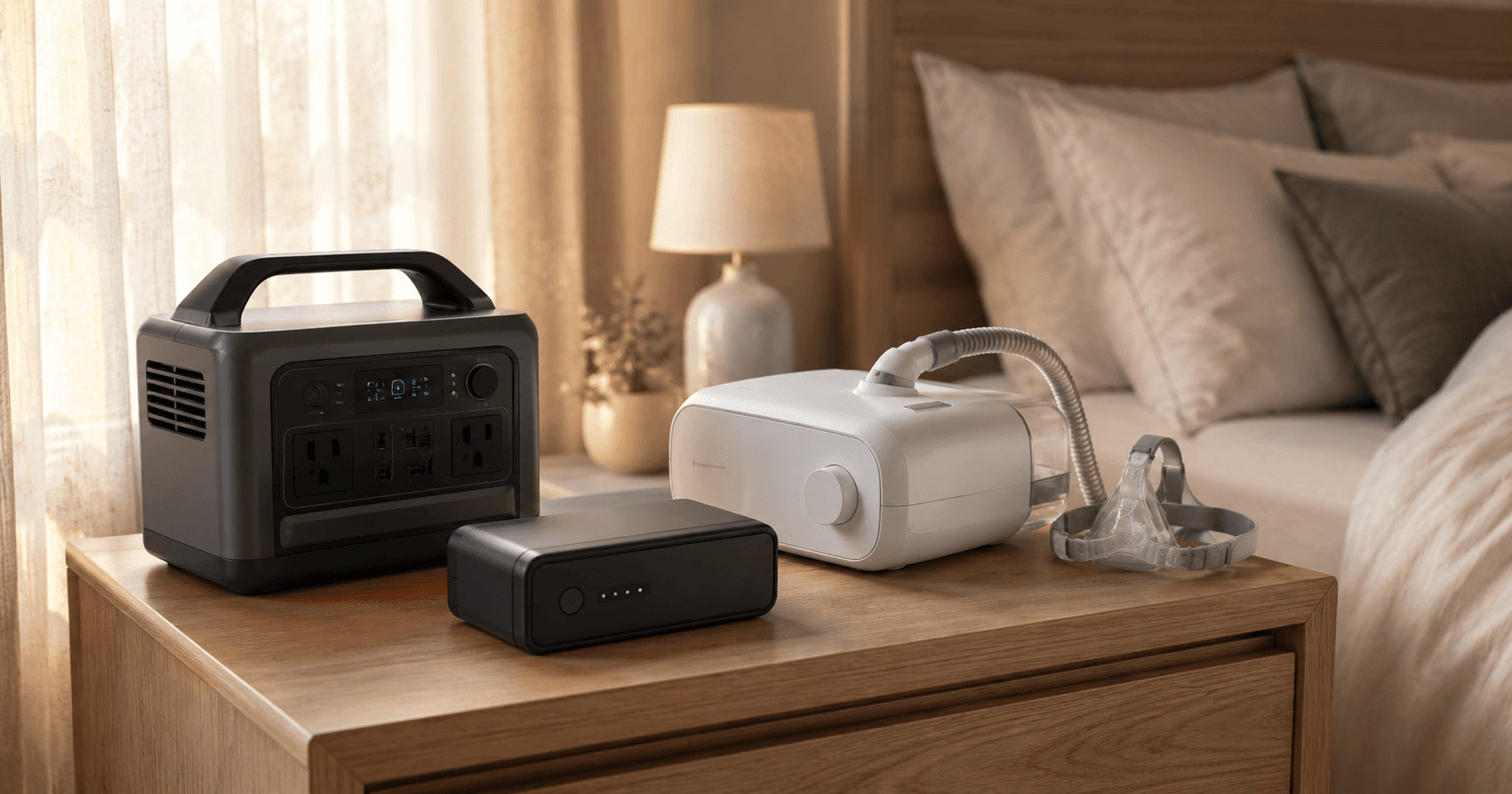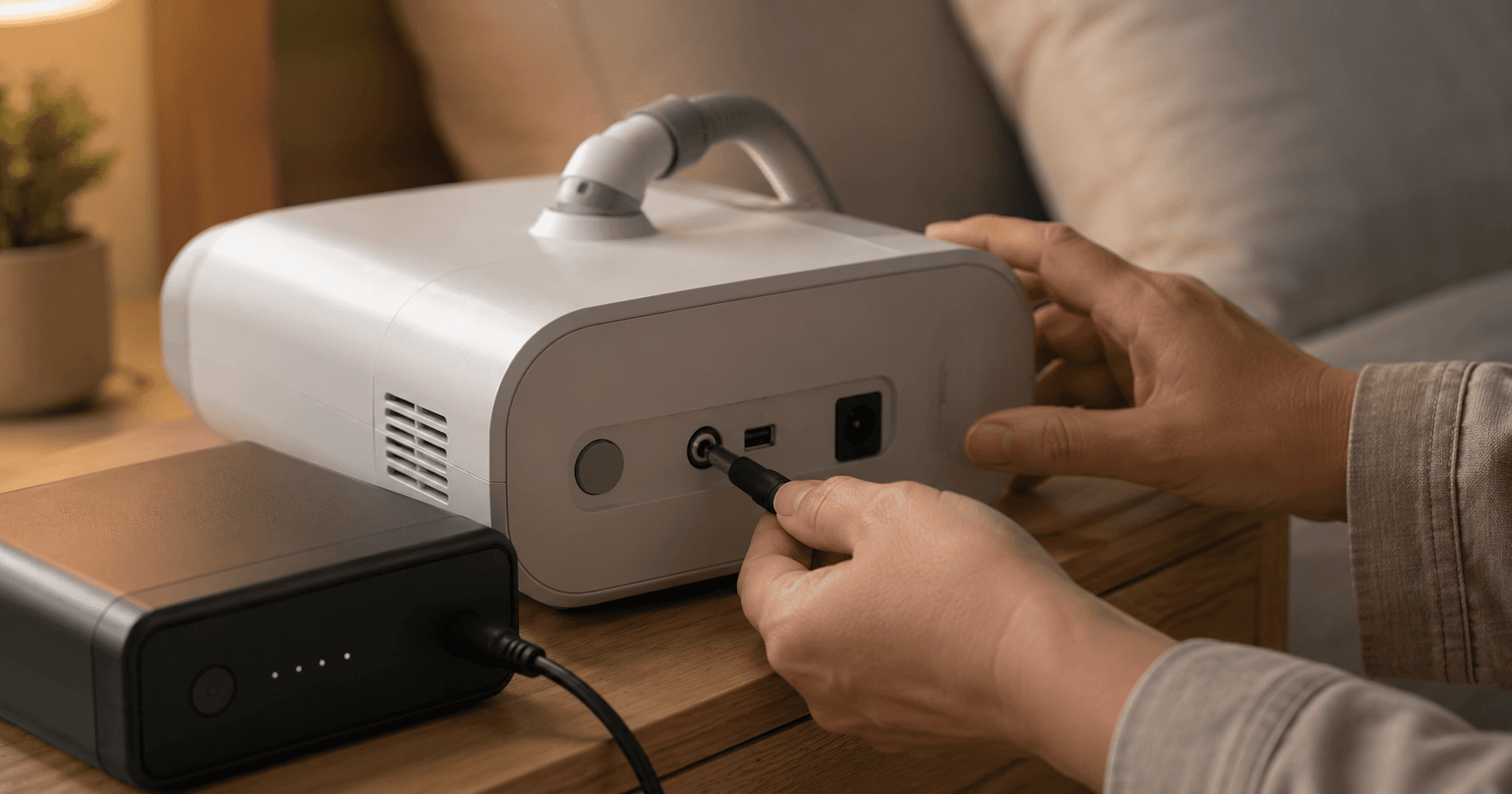
Short answer: sometimes. It depends on your plan, how the battery is coded, and whether your doctor documents a medical necessity.
Here's what people in the CPAP community have actually gotten covered -- and what to say to improve your odds.
Medicare and Medicaid coverage rules
Medicare Part B
Medicare Part B covers CPAP machines and supplies as durable medical equipment (DME). The standard coverage includes the machine itself, masks, tubing, and filters -- all billed through a Medicare-approved DME supplier.
CPAP batteries are not standard DME under Medicare. They're not listed in the HCPCS code set as a standard CPAP accessory. However, some patients have gotten coverage by having the battery coded under E1399 (miscellaneous DME, not otherwise classified). This is a catch-all code, and it requires documentation from your doctor stating that power outages or travel interruptions pose a health risk.
The problem with E1399: Medicare reviewers are inconsistent about approving it. Some regional Medicare Administrative Contractors (MACs) approve it regularly; others almost never do. Your odds depend partly on where you live.
What your DME supplier needs to submit:
- HCPCS code E1399 with a detailed description of the item
- A letter of medical necessity from your prescribing physician
- Documentation of your CPAP compliance (Medicare requires 4+ hours per night, 70% of nights over a 30-day period)
- Clinical justification for why a battery backup is medically necessary (not just convenient)
Medicare Advantage plans: If you're on Medicare Advantage, your plan may have broader DME coverage than original Medicare. Call the number on your card and ask specifically: "Is a CPAP battery backup covered under my plan's DME benefit?" Some MA plans cover items that original Medicare won't.
Medicaid
Medicaid coverage varies by state. Some state Medicaid programs cover CPAP batteries as DME; many don't. Medicaid generally follows Medicare's lead on coding, so you'd use the same E1399 approach. Contact your state's Medicaid office or your managed care plan directly to check.
States with more generous DME coverage (like New York and California) are more likely to approve. States with tighter Medicaid budgets may require a more detailed appeal process.
Private insurance process
Private insurers follow similar logic to Medicare but with more variation. Here's how the process typically works:
Step 1: Check your plan's DME formulary
Before submitting anything, look up your plan's DME coverage list. Some plans explicitly list covered items; if a "backup power supply" or "battery for medical equipment" is on the list, the process is straightforward. If it's not listed, coverage is still possible -- it just requires prior authorization.
Step 2: Get prior authorization
Most private plans require prior authorization for non-standard DME items. Your DME supplier typically handles this, but you can initiate it yourself by calling the number on your insurance card.
What the prior auth request needs:
- Your CPAP prescription and diagnosis (ICD-10 code G47.33 for obstructive sleep apnea)
- A letter of medical necessity from your doctor
- The specific item you're requesting (manufacturer, model, HCPCS code)
- Clinical justification
Step 3: Letter of medical necessity
This is the single most important document in the process. A weak letter gets denied. A strong letter gets approved. More on what this needs to say below.
Step 4: Wait for the decision
Typical timeline: 5-15 business days for a prior auth decision. Some plans respond faster; some drag it out. If you haven't heard back in 15 business days, call and follow up. Insurance companies sometimes "lose" requests that sit in a queue.
Step 5: Appeal if denied
First denials are common -- don't take it personally. An appeal with additional clinical notes gets approved more often than the initial submission suggests. You typically have 60-180 days to file an appeal (check your plan's specific deadline).
Scenarios where private insurance tends to approve:
- Documented medical necessity: Your doctor writes that you require continuous CPAP use and a backup power source is medically necessary. Common for people in areas with frequent outages or who travel for work.
- Bundled with new equipment: Requests bundled with a new machine prescription or equipment renewal have higher approval rates than standalone battery requests.
- Replacement after documented failure: If your primary power supply fails and a battery is part of the recommended replacement setup, some insurers cover it under equipment repair/replacement.
FSA/HSA eligibility for CPAP batteries
This is the most reliable path to reducing your out-of-pocket cost, and it doesn't require insurance approval at all.
CPAP batteries are confirmed FSA and HSA eligible. The IRS classifies CPAP devices and accessories as qualified medical expenses under Section 213(d) of the Internal Revenue Code. Batteries and power supplies used with a prescribed CPAP machine fall under this classification.
What this means in practice:
- You can buy a CPAP battery with your FSA or HSA debit card
- If you pay out of pocket, you can reimburse yourself from your FSA/HSA
- You don't need a letter of medical necessity for FSA/HSA purchases (your CPAP prescription is sufficient)
- There's no prior authorization or approval process
The math:
- A $200 CPAP battery costs you roughly $130-150 after the tax benefit, depending on your marginal tax rate
- At a 30% combined federal + state rate, you save $60 on a $200 purchase
- At a 37% rate (high earners), you save $74 on the same purchase
What qualifies:
- CPAP-specific batteries (Medistrom Pilot-24 Lite, ResMed AirMini battery, etc.)
- Portable power stations used primarily for CPAP (Jackery, EcoFlow, etc.)
- DC cables and adapters for connecting your CPAP to a battery
- Solar panels purchased specifically for charging a CPAP battery (keep documentation)
Keep your receipts. If the IRS or your FSA administrator asks for substantiation, you'll need the receipt and a copy of your CPAP prescription. Some FSA/HSA administrators require a letter of medical necessity for items over a certain dollar amount -- check with your plan.
What documentation your doctor needs to write
The letter of medical necessity is where most claims succeed or fail. Here's what a strong letter includes:
Required elements:
- Your diagnosis (obstructive sleep apnea, ICD-10 G47.33) and severity (mild, moderate, severe based on AHI)
- Your current CPAP prescription (machine model, pressure setting, mask type)
- Documentation of CPAP compliance (usage data from your machine showing you meet the 4+ hours/night threshold)
- A clinical statement that uninterrupted CPAP therapy is medically necessary
- A specific explanation of why a backup power supply is needed (power outage risk, travel requirements, documented health consequences of therapy interruption)
Language that works:
- "Patient requires uninterrupted positive airway pressure therapy. Interruption of therapy poses risk of [specific health consequences: cardiac events, daytime somnolence affecting driving safety, oxygen desaturation, etc.]"
- "A backup power supply for the patient's CPAP device is medically necessary to ensure continuity of prescribed therapy"
- "Patient resides in an area subject to frequent power interruptions" or "Patient's employment requires regular travel without access to reliable power"
Language to avoid:
- "Battery" -- use "backup power supply for durable medical equipment" instead
- "Convenience" or "travel convenience" -- this gets flagged as non-medical
- "Patient requests" -- frame it as "physician prescribes" or "medically indicated"
Who should write it: Get this from your sleep specialist, not a general practitioner. Specialist documentation carries significantly more weight with insurance reviewers. A board-certified sleep medicine physician's letter is harder to deny than a GP's.
Step-by-step claims process with timeline
Here's the full process from start to finish, with realistic timeline expectations:
Week 1: Preparation
- Call your insurance to ask about CPAP battery coverage (note the date, time, and representative's name)
- Request your CPAP compliance data from your machine or app (most machines track usage automatically)
- Schedule an appointment with your sleep specialist to discuss the letter of medical necessity
Week 2-3: Documentation
- Your sleep specialist writes the letter of medical necessity
- Your DME supplier prepares the prior authorization request
- Submit the prior auth with all supporting documentation
Week 3-5: Waiting
- Insurance reviews the prior auth (5-15 business days is typical)
- If approved: your DME supplier orders the battery and bills insurance
- If denied: you have 60-180 days to appeal (plan-dependent)
Week 5-8 (if appealing):
- File the appeal with additional clinical documentation
- Include any supplementary information (CPAP compliance reports, specialist notes, relevant medical history)
- Appeal decisions typically take 15-30 business days
Week 8-12 (if second appeal needed):
- Some plans allow a second-level appeal or external review
- External review is conducted by an independent third party and is binding on the insurer
- This is your strongest option if internal appeals fail
Total timeline: Best case, 3-4 weeks from start to approval. If you need to appeal, expect 2-3 months. Plan accordingly -- don't start this process the week before a trip.
What gets denied and why
Understanding denial reasons helps you avoid them:
"Not medically necessary"
The most common denial. This means your documentation didn't make a strong enough case that a backup power supply is required for health reasons, not just convenience. Fix this with a stronger letter from your sleep specialist that includes specific health risks of therapy interruption.
"Cosmetic or convenience item"
If the request is framed as a travel accessory or lifestyle item rather than a medical necessity, it gets denied under the "cosmetic/convenience" exclusion. This is why language matters -- "backup power supply for life-sustaining equipment" gets different treatment than "portable CPAP battery for camping."
"Not a covered DME item"
Some plans explicitly exclude backup power supplies. If this is the denial reason, check whether your plan has an exception process or whether a different HCPCS code (like A9999, miscellaneous supply) might work. Your DME supplier can advise.
"Insufficient documentation"
The letter was too vague, compliance data was missing, or the diagnosis wasn't documented clearly. This is the easiest denial to overturn -- resubmit with complete documentation.
"Out-of-network DME supplier"
You used a supplier that's not in your plan's network. This doesn't mean the item isn't covered -- it means you need to go through an in-network supplier. Ask your insurance for a list of approved DME suppliers.
"Duplicate equipment"
If you already have a power supply on file (your standard AC adapter counts), some plans deny a second one as a duplicate. The appeal here is that a battery backup is a different category of equipment -- it provides power when AC is unavailable, which the standard adapter cannot do.
What people on r/CPAP actually report
From recent threads on the CPAP subreddit:
- Most users report that standalone CPAP battery requests are denied on the first submission
- Approvals happen most often when the request is bundled with a new machine prescription or equipment renewal
- The framing matters: "backup battery" gets denied more often than "medical necessity power supply for continuous therapy"
- A few users report success by having their sleep specialist (not just a GP) write the letter -- specialist documentation carries more weight
- Several users report that switching from E1399 to a different code (with DME supplier guidance) resulted in approval after initial denial
- Users on Medicare Advantage plans report higher approval rates than those on original Medicare
How to improve your odds
-
Get documentation from your sleep specialist, not a general practitioner. Specialists carry more weight with insurance reviewers.
-
Use the right language. Ask your doctor to write that uninterrupted CPAP therapy is medically necessary and that power interruptions pose a risk to your sleep apnea management. Avoid the word "battery" in the letter -- use "backup power supply for durable medical equipment."
-
Check your plan's DME formulary before submitting. Some plans explicitly list what's covered; if a battery is on the list, the process is straightforward.
-
Appeal denials. First denials are common. An appeal with additional clinical notes gets approved more often than the initial submission suggests.
-
Use FSA/HSA as a fallback. If insurance denies it, pay with pre-tax money. It's not perfect, but it reduces the real cost by 25-35%.
-
Bundle with equipment renewal. If you're due for a new CPAP machine or supplies, submit the battery request at the same time. Bundled requests have higher approval rates.
-
Document everything. Keep a log of every call to your insurance company (date, time, representative name, what was said). This protects you during appeals and helps if you need to escalate to your state's insurance commissioner.
The honest bottom line
Most insurance plans won't cover a CPAP battery without a fight. The ones that do usually require a sleep specialist letter, the right billing codes, and sometimes an appeal.
The fastest path to a CPAP battery is FSA/HSA. If you don't have an FSA, the second fastest path is calling your insurer directly, asking them to confirm coverage before submitting, and getting the documentation your doctor needs to write a strong letter.


If you go the insurance route, give yourself 2-3 months of lead time. Don't start this process the week before you need the battery.
FAQs
Is a CPAP battery FSA eligible?
Yes. CPAP batteries and power supplies are FSA and HSA eligible as qualified medical expenses under IRS Section 213(d). You can purchase with your FSA/HSA debit card or reimburse yourself. No letter of medical necessity is required for FSA/HSA -- just keep your receipt and CPAP prescription on file.
What's the billing code for CPAP battery coverage?
The most commonly used HCPCS code is E1399 (miscellaneous DME, not otherwise classified). Some DME suppliers also use A9999 (miscellaneous supply or accessory). Your DME supplier will handle the coding -- just make sure they know you're seeking insurance coverage, not submitting as self-pay.
My insurance denied my CPAP battery claim. What now?
File an appeal. Include a letter from your sleep specialist documenting medical necessity, your diagnosis documentation, CPAP compliance data, and any records showing you meet the usage threshold. First denials are often overturned on appeal. You typically have 60-180 days to file, and many plans offer two levels of internal appeal plus an external review option.
Does Medicare cover travel CPAP machines?
Medicare covers one CPAP machine as primary equipment. A second travel unit generally isn't covered unless the primary machine is damaged and the travel unit is a replacement, not a supplement. Medicare Advantage plans have more flexibility -- some cover a second device with proper documentation.
How long does the insurance approval process take?
Expect 3-5 weeks from submission to decision for the initial request. If denied and you appeal, add another 3-6 weeks for the appeal decision. Total timeline with one appeal: roughly 2-3 months. Start early if you need the battery by a specific date.
Can my employer's HR department help with a denied claim?
Sometimes. If you're on an employer-sponsored plan, your HR benefits team can sometimes escalate issues with the insurance carrier. This is especially true for self-funded plans where your employer has more direct influence over coverage decisions. It's worth asking, but don't rely on it as your primary strategy.
What if I have both Medicare and private insurance?
If you have Medicare as primary and a supplemental (Medigap) policy, the supplemental plan may cover what Medicare doesn't -- but only if Medicare processes the claim first. Submit to Medicare first, get the denial or partial payment, then submit the Explanation of Benefits (EOB) to your supplemental carrier. Some Medigap plans cover the 20% coinsurance on approved DME but won't cover items Medicare denies outright.
Is a portable power station (like Jackery) covered, or only CPAP-specific batteries?
Insurance coverage generally applies to any "backup power supply for DME" regardless of brand, as long as the letter of medical necessity supports it. However, CPAP-specific batteries (like the Medistrom Pilot-24 Lite) are easier to justify because they're clearly single-purpose medical accessories. A general-purpose power station might get flagged as a non-medical item. If you go with a general power station, have your doctor's letter specify that this device is prescribed for CPAP power backup.
Looking for CPAP battery recommendations? See our CPAP battery backup guide for the top-rated options at every price point.
Related reading
- CPAP battery backup guide — top-rated CPAP batteries at every price point
- CPAP battery tax deduction — FSA/HSA rules and medical expense deductions explained
- CPAP battery rental options — short-term alternatives when insurance says no
- Medistrom Pilot-24 Lite review — the battery most commonly approved under E1399
- CPAP power outage prep guide — documentation you can use to justify medical necessity
What to do next
Don't wait for an outage or a trip to start the paperwork. Insurance approval for CPAP batteries takes 3-12 weeks, and FSA/HSA is almost always faster than fighting a denial.
- Call your insurer today and ask specifically whether HCPCS code E1399 is covered under your DME benefit
- Request a letter of medical necessity from your sleep specialist using the language in the section above
- If insurance stalls, buy an FSA/HSA-eligible CPAP battery now and reimburse yourself pre-tax