
Can I use a ResMed CPAP without water? Yes. Both the ResMed AirSense 10 and AirSense 11 deliver your full prescribed pressure with no water in the tub. The humidifier only warms and moistens the air, so running dry changes comfort, not therapy.
The short answer: Both the ResMed AirSense 10 and AirSense 11 deliver full therapy pressure without water. Either leave the empty tub in place and set Humidity Level to Off in My Options, or swap the tub for ResMed's side cover (AirSense 10 ref 37303, AirSense 11 ref 39226). The air will feel drier, but battery runtime roughly doubles.
This guide covers the model-specific setup for each AirSense, the exact ResMed part numbers to order, what happens if the tub runs dry mid-night, and how much battery runtime you gain. If you use a different brand, our general guide to using CPAP without water covers the basics for any machine.
Can I use my ResMed CPAP without water?
Yes, and ResMed says so directly. In its humidification guide, ResMed writes: "Your machine works without water in the tub, but you need to insert the tub into the machine and turn humidification off in the My Options menu on your AirSense 10 or AirCurve 10 machine. If you don't want to use the humidifier, you'll need to insert a side cover into the device." (ResMed)
The humidifier is a heated water tub that adds warmth and moisture to the air your blower pushes through the hose. Your prescription is a pressure in cmH2O, and the blower delivers that pressure whether the tub is full, empty or replaced by a side cover.
The two valid setups
| Setup | What's fitted | What you change | Best for |
|---|---|---|---|
| Empty tub + humidity off | HumidAir tub, empty | Humidity Level Off (and Tube Temperature Off) in My Options | Occasional dry nights, power outages |
| Side cover | ResMed side cover in place of the tub | Nothing else; the machine runs as a standalone CPAP | Travel, seasonal use, a cracked or missing tub |
The one thing not to do
Don't run an AirSense with the side opening empty. ResMed's AirSense 11 side cover listing states: "Your PAP device will not work unless it is fitted with a HumidAir 11 or a side cover." (ResMed Shop) For the AirSense 10, ResMed's guidance is the same in practice: keep the tub in place, or insert a side cover if you don't want to use the humidifier.
The bottom line: Using your ResMed CPAP without water is officially supported. Pick one of the two setups above and turn humidification off yourself.
How to use the AirSense 10 without water
You can use a ResMed AirSense 10 without water in two ways: keep the empty HumidAir 10 tub fitted and turn humidity off, or replace the tub with the AirSense 10 side cover. ResMed's official instruction names the AirSense 10 and AirCurve 10 specifically.
Option A: Empty tub, humidity off
- Empty and dry the HumidAir 10 tub, then slide it back into the machine.
- Open My Options and set Humidity Level to Off.
- If you don't see Humidity Level, your machine is probably set to Climate Control Auto. Switch Climate Control to Manual first, and the humidity setting should appear.
- If you use a ClimateLineAir heated tube, set Tube Temperature to Off as well. That setting only shows up when a heated tube is connected.
The exact menu layout depends on your Climate Control mode and firmware, so treat these as the settings to look for rather than a fixed tap sequence. Your AirSense 10 user guide has the definitive path.
Option B: The AirSense 10 side cover (ref 37303)
A side cover (some sellers call it an end cap) is a plastic panel that fills the tub slot so the machine runs as a standalone CPAP. The AirSense 10 side cover is ResMed ref 37303. ResMed lists it "for use with AirSense 10 series of devices," and retailers list it as fitting the AirSense 10, AirCurve 10 and AirStart 10.
It fits into the slot where the tub normally sits. That makes the machine shorter and lighter for travel, and you can't spill water into the device in a bag.
Watch the part number. ResMed refs 37296 and 37298 are the ClimateLineAir 10 heated tube, not the side cover. If a listing shows a tube, you have the wrong part.

Powering an AirSense 10 on DC
The AirSense 10 uses a 90 W, 24V DC power supply (3.75 A). ResMed's own Air10 DC/DC Converter 90W accepts 12V or 24V DC input and outputs 24V at 3.75 A. A lower-cost 24V, 90 W converter built for the AirSense 10 is the HKY model below.

A universal 12V-to-24V CPAP car adapter rated around 84 W should also cover the AirSense 10 with the humidifier off, since the dry draw is far below 84 W. See our best battery for the ResMed AirSense 10 for full picks.
How to use the AirSense 11 without water
You can use a ResMed AirSense 11 without water by fitting the empty HumidAir 11 tub with humidity off, or by clicking in the AirSense 11 side cover. The side cover is the cleaner option because ResMed says it switches off the heating hardware for you.
Option A: Empty HumidAir 11 tub, humidity off
- Empty and dry the HumidAir 11 tub and click it back in.
- On the touchscreen, open My Options and set Humidity Level to Off.
- If you use a ClimateLineAir 11 heated tube, set Tube Temperature to Off.
Menu names can shift slightly between firmware versions, so check your AirSense 11 user guide if a label looks different.
Option B: The AirSense 11 side cover (ref 39226)
The AirSense 11 side cover is ResMed ref 39226. ResMed describes it as letting you use the AirSense 11 without a HumidAir 11 water tub, and says it "should click into place when it is inserted." ResMed suggests it for travel, seasonal humidifier use, or when your tub is damaged or unavailable.
According to ResMed's listing, the side cover automatically disables the heater plate and heated tubing when it's fitted. ResMed also warns not to wash the inside of the side cover, because it holds sound-abatement foam. Wipe the outside only.
What about the ClimateLineAir 11 heated tube?
ClimateLineAir 11 heated tubing is designed to be used with the HumidAir 11 humidifier on and water in the tub. With the side cover fitted, ResMed says the heated tube is disabled. With an empty tub fitted, turn Tube Temperature off. A heated tube warming dry air uses battery for little benefit.
A note on weak DC power
The AirSense 11 ships with a 65 W, 24V DC power supply (2.71 A). Retailer spec listings quote a typical consumption of 56.1 W and a peak of 73.2 W, with the humidifier and heated tube running (Apria Direct).
Some retailers, including The CPAP Shop, report that the AirSense 11 may disable the heated humidifier or heated tube on underpowered or third-party supplies. ResMed hasn't confirmed this publicly, so treat it as possible rather than certain. Either way, humidity-off is the safe setting on small DC sources.
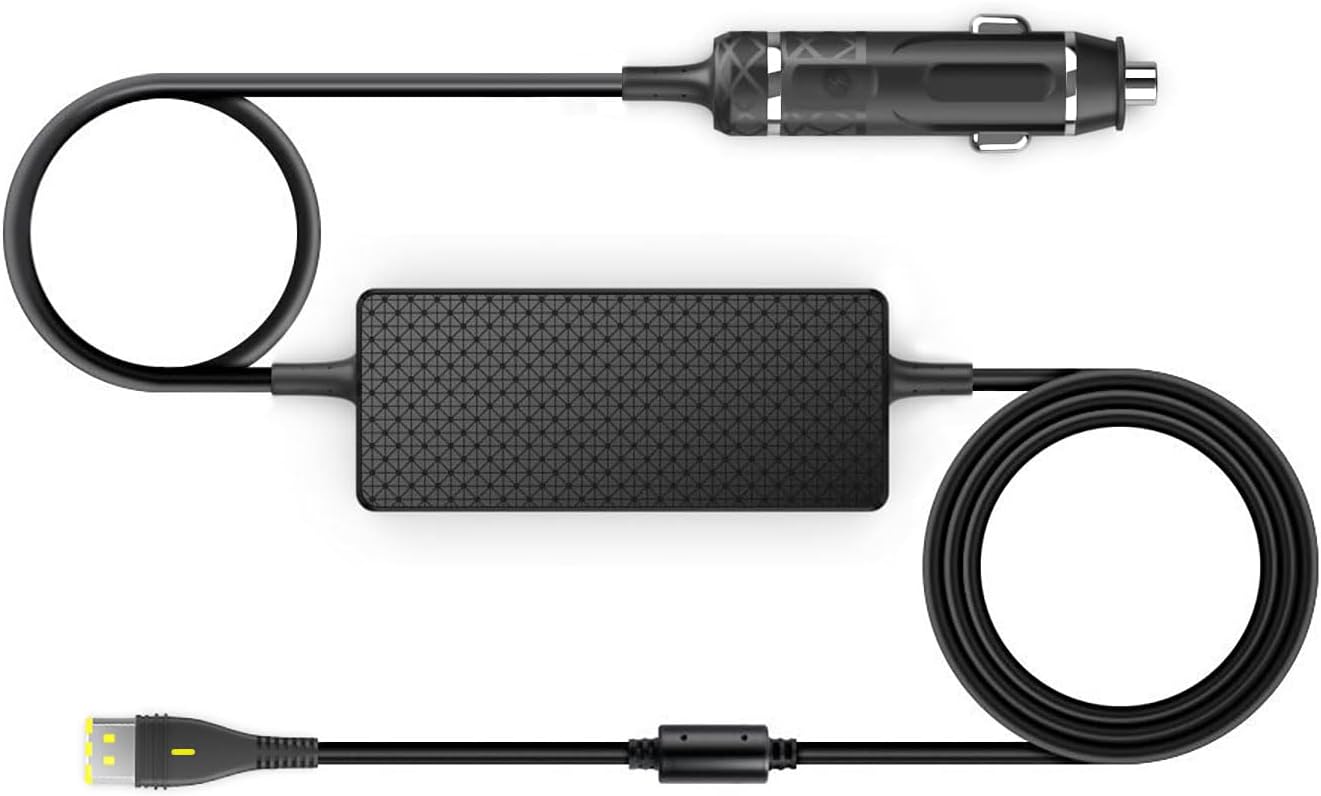
ResMed's own Air11 DC Converter (SKU 39231) is rated 90 W, takes 12V or 24V input and outputs 24V through a cigarette-lighter plug. A lower-cost alternative that plugs into a power station's car port is the HKY converter below.
What happens if the tub runs dry with the humidifier still on?
If your AirSense tub runs dry partway through the night, therapy continues at the same pressure. The difference is that the air turns dry, so you may wake with a dry mouth or stuffy nose.
Don't count on the machine noticing
No ResMed source we found says the AirSense 10 or AirSense 11 senses the water level. The AirSense doesn't reliably know your tub is empty, so turn Humidity Level off yourself on nights you plan to skip water.
Is it harmful?
There is no documented damage from running an AirSense with an empty tub and the humidifier on. It does waste power, because the heater plate keeps heating an empty tub, and ResMed's instruction is to turn humidification off. On battery, that wasted heat can be the difference between a full night and a dead battery at 3 a.m.
Climate Control Auto can limit humidity on its own
On the AirSense 11, Climate Control Auto puts preventing rainout (condensation in the hose) ahead of maximum humidity. In a cold bedroom it may deliberately deliver less moisture (The CPAP Shop). If you run out of water faster than expected, check your settings before assuming a fault.
If you do use water, use distilled. Tap water leaves mineral scale in the tub. Our distilled water for CPAP guide covers what to buy and what to do when you can't find it.
Humidifier off roughly doubles AirSense battery runtime
Turning the humidifier and heated tube off roughly doubles to nearly triples your AirSense battery runtime. At high settings, the humidifier and heated tube together draw more power than the blower itself.
Based on our CPAP battery runtime calculator, an AirSense 11 at a typical pressure draws about:
- ~18 W with the humidifier and heated tube off
- ~28 W with the humidifier on low
- ~48 W with the humidifier on high plus the heated tube
That's a 2.7x difference between high humidity and dry (48 W vs 18 W), and 1.6x between low humidity and dry.
AirSense 11 runtime: humidifier on vs off
Estimated runtimes at a pressure of about 10–12 cmH2O, DC-direct. Formula: battery Wh × 0.88 ÷ watts.
| Battery | Capacity | Humidifier + tube OFF (~18 W) | Humidifier low (~28 W) | Humidifier high + tube (~48 W) |
|---|---|---|---|---|
| Medistrom Pilot-24 Lite | 99 Wh | ~4.8 h | ~3.1 h | ~1.8 h |
| EcoFlow RIVER 2 | 256 Wh | ~12.5 h | ~8.0 h | ~4.7 h |
| Jackery Explorer 300 Plus | 288 Wh | ~14.1 h | ~9.0 h | ~5.3 h |
| EcoFlow DELTA-class | 1,024 Wh | ~50 h | ~32 h | ~19 h |
Worked example: 256 Wh × 0.88 ÷ 18 W = 12.5 hours on a RIVER 2 with humidity off.
AirSense 10 note: With the humidifier off, the AirSense 10 draws about the same: roughly 18.6 W at pressure 12, per our CPAP DC power adapter guide. ResMed's "typical" figures of about 53 W (AirSense 10) and 56 W (AirSense 11) include humidification, so don't use them to size a battery for dry nights.
Go DC-direct for another big jump
The table assumes DC-direct power. If you plug the stock AC brick into a power station's inverter instead, you lose a meaningful share to conversion. In our DC power adapter guide, an EcoFlow RIVER 2 ran an AirSense 10 for about 8.5 hours on AC versus 13+ hours on DC. That's why a DC converter is worth buying before a bigger battery.
Batteries that fit a dry AirSense night
For flights and carry-on travel, the FAA-friendly Medistrom Pilot-24 Lite covers a short dry night (about 4.8 hours on an AirSense 11). Pair two for a full 8 hours.

For home outages and camping, the EcoFlow RIVER 2 is the sweet spot: about 12.5 hours dry, which is a full night with room to spare.

Other good fits for humidifier-off nights include the Anker SOLIX C300 (288 Wh, three AC outlets) and the CPAP-focused Bluetti X30 (297 Wh). For model-specific picks, see our best battery for the ResMed AirSense 11 guide, or run your own numbers in the CPAP runtime calculator tool.
When running your AirSense dry makes sense (and when it doesn't)
Running your AirSense without water makes the most sense when you're on battery power or travelling. It makes the least sense when dryness is already affecting your sleep.
Common side effects of dry CPAP air are dry mouth, dry nose and throat, congestion and nosebleeds. They tend to be worse with full-face masks, mouth breathing, and cold or dry bedrooms (ResMed).
| Good fit for running dry | Poor fit for running dry |
|---|---|
| Power outages on battery backup | Full-face mask users or mouth breathers |
| Camping, road trips and flights | Cold or very dry bedrooms, winter heating |
| Humid climates or summer months | History of nosebleeds or nasal congestion |
| Broken or missing tub (use the side cover) | Long-term nightly use on wall power |
| You dislike warm, moist air | You already wake up parched |
The middle ground
You don't have to choose between full heat and bone dry:
- Passover humidification: water in the tub with the heater off. The air picks up some moisture at almost no power cost. Our CPAP humidifier battery drain guide explains how to set it up.
- Low humidity instead of high: on an AirSense 11, dropping from high to low cuts draw from about 48 W to about 28 W.
- Saline nasal spray before bed, and a chin strap if mouth breathing dries you out.
- A warmer bedroom: around 20–22°C (68–72°F) can reduce dryness and rainout.
If dryness is making you skip therapy, talk to your sleep clinician or equipment provider. Consistent use matters more than any battery saving.
In short: Go dry when power is limited. Keep water when you're at home and comfortable doing so.
Frequently asked questions
Can you use a ResMed AirSense 11 without the water tub?
Yes, if you fit the AirSense 11 side cover (ResMed ref 39226). ResMed says the AirSense 11 will not work unless a HumidAir 11 tub or a side cover is fitted, so don't run it with the opening empty.
Does the AirSense 10 need water to work?
No. Leave the empty HumidAir 10 tub in place and set Humidity Level to Off in My Options, or fit the AirSense 10 side cover (ref 37303).
What happens if my ResMed CPAP runs out of water during the night?
Therapy continues at your prescribed pressure, and the air becomes drier. There's no documented damage, but the heater wastes power, and ResMed doesn't say the AirSense detects an empty tub. Turn humidity off on nights you plan to skip water.
Can I use the ClimateLineAir heated tube without water?
ClimateLineAir tubing is designed to be used with the humidifier. The AirSense 11 side cover disables it. With an empty tub fitted, turn Tube Temperature off to save power.
How much longer will my CPAP battery last with the humidifier off?
Roughly two to nearly three times longer, depending on your humidity setting. On an AirSense 11 with an EcoFlow RIVER 2, that's about 4.7 hours with high humidity and the heated tube versus about 12.5 hours dry.
Related reading
- Can You Use a CPAP Without Water?: the general guide for any CPAP brand
- CPAP Humidifier Battery Drain: how to keep some humidity without killing your battery
- Best Battery for ResMed AirSense 11: compatible batteries and cables for the AirSense 11
- Best Battery for ResMed AirSense 10: compatible batteries and cables for the AirSense 10
- CPAP DC Power Adapter Guide: why DC-direct beats AC for runtime
- Distilled Water for CPAP: what to use when you do fill the tub
- CPAP Battery Not Lasting? Fixes: other reasons your battery runs short
What to do next
- Decide whether you need water tonight. On battery or travelling, go dry. At home with dryness symptoms, keep the water.
- Set it up correctly. Set Humidity Level and Tube Temperature to Off in My Options, or order the right side cover: 37303 for the AirSense 10, 39226 for the AirSense 11.
- Size your battery. A dry 8-hour night on an AirSense 11 needs about 190 Wh, according to our CPAP battery runtime calculator.
- Go DC-direct. Use a 12V-to-24V converter (the HKY converter above for the AirSense 11, or the 90 W HKY AirSense 10 converter) to get noticeably more runtime from the same battery.
