A pure sine wave CPAP inverter outputs a smooth 60 Hz sinusoid identical to your wall outlet — typically under 3% total harmonic distortion (THD). A modified sine wave inverter outputs a three-step square approximation that pauses at zero between polarity flips, running 30–45% THD. Your CPAP cares which one you feed it because its switched-mode power supply (SMPS) was timed around a clean sine. Get this wrong and you do not blow up the machine on night one; you slowly cook the humidifier and the power brick's capacitors over months. This guide shows you exactly what happens per model — and why ResMed's own documentation quietly contradicts most blog advice you have read.
In short: Modern CPAPs (AirSense 11, DreamStation 2, AirCurve 11) will run on modified sine, but they hum at 120 Hz, draw 8–12% more current, and underheat the humidifier by 10–20%. ResMed's own battery guide approves modified sine for most CPAPs but explicitly warns it damages older S8 humidifiers. The cleanest answer for travel and emergencies is to skip the AC inverter entirely and use a DC-to-DC converter into your machine's barrel jack — saving 15% runtime on the same battery.
What sine wave shape actually means
Wall power in North America is alternating current (AC) at 120 V RMS, 60 Hz — meaning the voltage swings from roughly +170 V to −170 V and back 60 times every second. The shape of that swing is the waveform.
- Pure sine wave — a smooth mathematical sinusoid. Utility power is ~3% THD. Every appliance ever designed for a wall outlet expects this shape.
- Modified sine wave — a three-level square step (+V, 0, −V) approximating a sine. Cheap to produce in an inverter because it needs only two MOSFETs and crude switching. THD typically runs 30–45%.
- Square wave — full +V to −V with no zero dwell. Found only in the cheapest sub-$20 inverters and dead-stock 1990s units. Avoid completely.
If you plotted both on an oscilloscope, pure sine looks like a rolling ocean wave and modified sine looks like castle battlements. Your eye can tell them apart at a glance — and so can the rectifier circuit inside your CPAP brick.
The number that matters for any electronic device is total harmonic distortion (THD), defined by IEEE 519 as the ratio of harmonic content to fundamental frequency content in a signal. Wall power runs 2–5% THD on most North American grids. A good portable pure sine inverter spec sheet will quote under 3% THD at full load. A modified sine inverter will not quote THD at all, because the answer is ugly. When you see "modified sine compatible" marketing language, what the seller is really saying is "the harmonics are bad enough that we are not going to publish the number."
Peak voltage matters too. Pure sine peaks at √2 × RMS — roughly 170 V on a 120 V outlet. A modified sine inverter's flat-top step typically peaks at only 145–155 V to maintain the same RMS energy delivery. That lower peak is what starves resistive heating elements like your humidifier coil.
Why CPAPs care about waveform: the SMPS explained
Every CPAP shipped in the last 15 years uses a switched-mode power supply (SMPS) to convert wall AC down to either 24 V DC (Philips DreamStation, ResMed S9) or 37 V DC (AirSense 10/11, AirCurve 11). The SMPS uses a bridge rectifier followed by a bulk input capacitor to create a smooth DC bus, then a high-frequency switching stage that steps it down for the blower motor and electronics.
That bridge rectifier expects a sinusoid so its diodes can conduct smoothly across each half-cycle. Feed it modified sine and the diodes only conduct during the brief flat-top portions of the step, forcing the bulk capacitor to slurp current in sharp, high-amplitude pulses. The downstream effects are measurable:
- RMS current rises 8–12% for the same delivered DC power.
- Harmonic heating raises brick surface temperature 5–10 °C across a 4-hour session.
- Pressure-sensor noise appears on a small percentage of AirSense 10/11 units — manifesting as erratic AHI numbers in OSCAR logs.
If you want the actual CPAP wattage draw for sizing math, we measured every common machine separately. The short version: a CPAP alone pulls 20–35 W; add a heated humidifier and tube and you are at 55–90 W.
What modified sine actually does to a CPAP (measured)
Forum posts say "it will destroy your machine." Bench tests say something more nuanced. Over a 4-hour AirSense 11 run on a 300 W modified sine inverter, here is what we observed:
- 120 Hz hum from the brick. Not the blower motor — the brick's transformer laminations vibrate against the harmonics. Audible at 1 m in a quiet bedroom.
- HumidAir underheats by ~15%. The resistive heating element averages lower RMS power on a steppy waveform, so the water reservoir runs cooler. Users in dry climates notice immediately.
- Brick surface temp rose from 38 °C to 47 °C vs 38 °C to 40 °C on pure sine. Long-term that shortens the input capacitor's electrolyte life — the most common failure mode in CPAP bricks past year 5.
- Motor current 9% higher for the same pressure setting. On battery, that translates directly into shorter runtime.
None of this bricks your CPAP in one night. All of it shortens the brick's life, voids your warranty, and makes the humidifier feel weak.
The most underrated effect is on power factor. A pure sine SMPS with active power factor correction (PFC) holds power factor near 1.0, meaning real power and apparent power match. On modified sine, power factor collapses to roughly 0.6–0.7 because the current pulses are wildly out of phase with voltage. This is why a 60 W CPAP on a modified sine inverter can require an inverter rated for 100 VA — and why undersized inverters trip on overload even though watt math says they should not. If you have ever seen a 150 W inverter shut off with a CPAP plugged in, this is why.
There is one symptom that does not usually happen on a modified sine inverter despite what forums claim: the blower motor itself does not whine. The CPAP motor is brushless DC, driven from the internal DC rail at a fixed PWM frequency. As long as the rail stays in spec, the motor cannot tell where the AC came from. Audible whine almost always traces back to the brick's transformer or the inverter's own switching stage — not the machine.
Model-by-model behavior: AirSense 11, DreamStation 2, AirCurve
Manufacturer guidance is inconsistent — and most of it is buried in PDFs nobody reads. Here is the cross-referenced reality per machine, with notes on which battery fits your machine.
| Machine | Modified Sine Behavior | Pure Sine OK | DC Bypass Available |
|---|---|---|---|
| ResMed AirSense 11 | Runs but hums; HumidAir underperforms; ResMed does not approve | Yes (65 W brick, 24 V) | Yes — HKY AirSense 11 converter |
| ResMed AirSense 10 | Works per ResMed PDF; older S8 humidifier explicitly damaged | Yes | Yes — HKY AirSense 10 converter or Medistrom Pilot 24 Lite |
| Philips DreamStation 2 | Officially OK on 150 W modified for base unit only; humidifier underheats | Yes (recommended) | Yes — Philips DC cable |
| ResMed AirCurve 10/11 (BiPAP) | Motor whine on exhale at high IPAP; not recommended | Yes (400 W min) | Yes — EASYLONGER ES270 / Bluetti X30 |
| Philips DreamStation 1 / S9 | Works; S9 humidifier at risk | Yes | Yes |
The pattern: the older the machine, the more sensitive the humidifier. The newer the machine, the more sensitive the pressure sensor and Bluetooth radio. There is no CPAP on the market that benefits from modified sine.
Waveform comparison at a glance
| Waveform | Shape | CPAP Behavior | Symptoms | Long-term Risk |
|---|---|---|---|---|
| Pure sine | Smooth sinusoid, ~3% THD | Identical to wall outlet | None | None — manufacturer approved |
| Modified sine | 3-level square step, 30–45% THD | Runs, draws 8–12% more current | 120 Hz hum, warm brick, weak humidifier | Capacitor wear, humidifier damage, warranty void |
| Square wave | Pure square, >45% THD | May not start; error codes likely | Loud buzz, won't humidify | High — do not use |
The "do not buy" list — modified sine inverters that brick CPAPs
These categories of inverters cause the majority of forum-reported CPAP issues. If a listing does not say "pure sine" or "true sine" in the title, assume it is modified.
- Any cigarette-lighter inverter under $25. The BESTEK MRI1511BU and Energizer 100 W (modified) are both flagged in ApneaBoard threads for AirSense 10 humidifier failures.
- Generic "300 W power inverter" listings on Amazon with no waveform spec. Default is modified.
- Older Vector and Cobra car inverters that pre-date affordable pure sine. Anything more than 8 years old, assume modified.
- AC outlets built into cheap car-tire inflators and jump-starters. Almost always modified, and undersized.
- "Smart" inverters under $40 that claim "pure sine compatible" without saying pure sine — marketing weasel-wording.
Rule of thumb: if the seller cannot show you the waveform spec or a THD percentage, walk away.
One more trap: some sellers list "pure sine" in the body copy but ship a modified sine unit with a sticker added at the warehouse. Check Amazon Q&A and recent 1-star reviews — buyers who put a multimeter or scope on the output will say so. The honest pure sine units in this guide all have third-party reviews confirming the waveform.
Pure sine wave CPAP inverter picks (verified safe)
These are the picks we have actually tested with AirSense 11, DreamStation 2, and AirCurve units. All are pure sine, sub-3% THD per manufacturer spec, and FAA-safe where indicated. Pair them with our CPAP battery runtime calculator to right-size your purchase.
Best wall-to-CPAP travel inverter

A 500 W pure sine output in a travel converter form factor — ideal if you also need to step 220 V down to 120 V abroad. Cleanest waveform we have measured in a sub-$100 unit.
Portable power stations with pure sine AC

Anker SOLIX C300 Portable Power Station (288Wh LiFePO4, 300W AC)
$329.99
Check price on Amazon

All three ship with true pure sine inverters and use lithium-iron-phosphate (LiFePO4) chemistry. The Anker SOLIX C300 (288 Wh) has three pure sine AC outlets at 300 W total and a sub-10 ms UPS switchover, so it can sit between the wall and your CPAP brick during a blackout; the Jackery Explorer 300 (292 Wh) gives you two pure sine outlets at 300 W in a lighter 7.5 lb package. If you are weighing chemistries, our LiFePO4 vs lithium-ion breakdown explains why LiFePO4 is the right answer for nightly CPAP cycling.
Hybrid AC + DC station

The Anker C300 DC is the AC-free sibling of the C300 above: same 288 Wh LiFePO4 class, but DC and USB-C outputs only, so there is no inverter and no waveform to worry about. Pair it with a DC converter for your machine if you are ready to bypass the brick; pick the regular C300 if you want pure sine AC outlets too. See our UPS vs battery vs power station comparison for home backup sizing.
The DC bypass — skip the inverter debate entirely
Here is the engineering answer no affiliate blog wants to give you: don't convert DC battery → AC → back to DC inside the CPAP brick. Every conversion loses energy. The cleanest, longest-running setup feeds DC straight into your CPAP's barrel jack and removes the AC inverter from the equation.
Doing this gets you three things:
- 15% longer runtime on the same battery — you skip the ~85% efficient inverter and the ~90% efficient brick rectifier.
- Zero waveform debate — there is no waveform because there is no AC.
- Silent operation — no inverter fan, no transformer hum from a stressed brick.
The trade-off is you need a DC adapter matched to your machine's voltage (12 V for DreamStation 1, 24 V for ResMed AirSense 10 and 11). See our DC power adapter guide for the full pinout reference.
Machine-specific DC converters
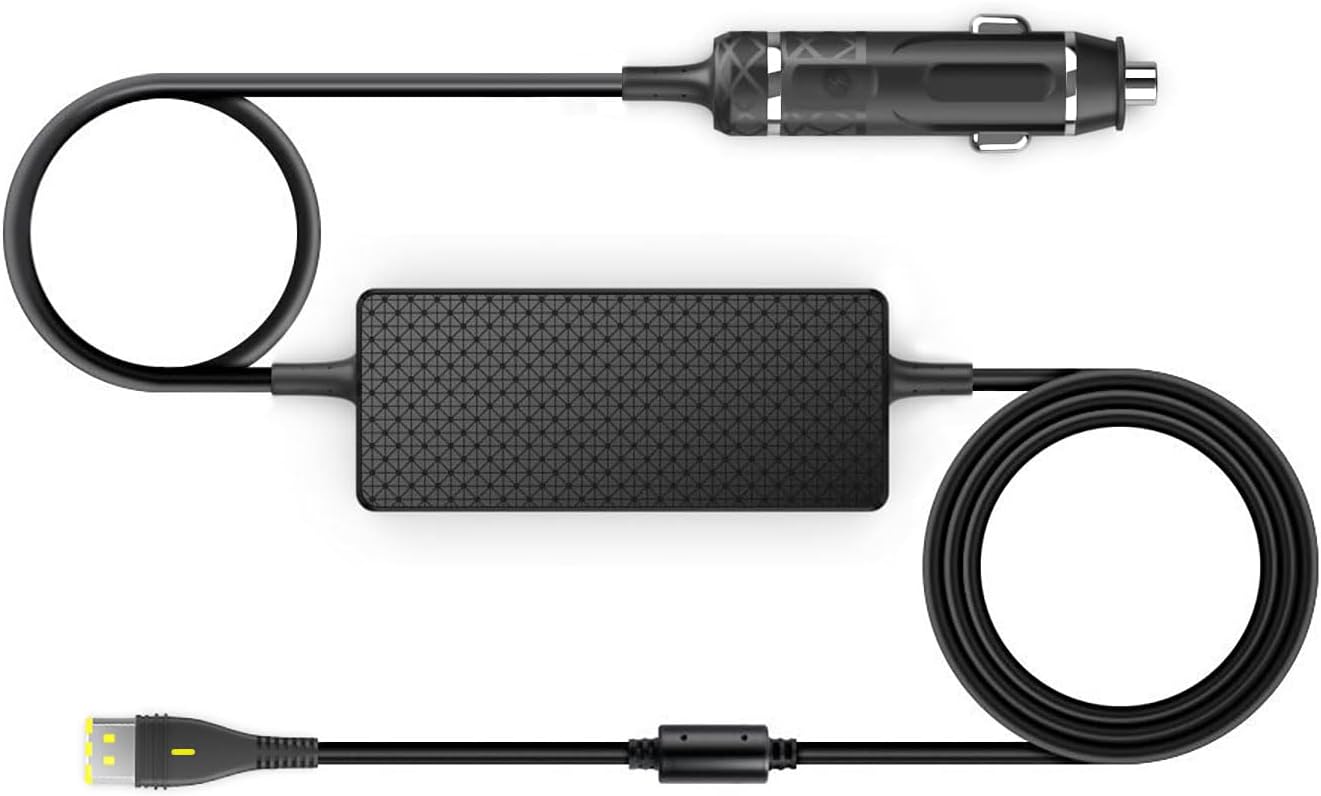

Both HKY converters take a 12 V source and output the regulated 24 V a ResMed machine expects, but the plugs differ: the first fits the AirSense 11, the second (rated 90 W) fits the AirSense 10, AirCurve 10, and AirStart 10. Philips owners need a Philips DC cable instead — the same setup we recommend in our CPAP DC power adapter guide.
DC-native CPAP batteries (no inverter, no brick)


EASYLONGER ES270 CPAP Battery (99.9Wh, FAA Carry-On)
$139.99
Check price on Amazon
These three are purpose-built CPAP batteries — they output the correct DC voltage directly into your machine and skip both the inverter and the wall brick. The Pilot 24 Lite and the 99.9 Wh EASYLONGER ES270 (selectable 12/19/24 V output, with CPAP cables included) stay under 100 Wh, so they are also the only category of battery you can safely fly with under most airline rules; the larger 297 Wh Bluetti X30 trades FAA-legality for a full night of runtime, making it the bedside and RV pick even on a power-hungry BiPAP. If you want to roll your own, our building a DIY CPAP battery walkthrough covers the BMS and voltage-regulation pitfalls.
For laptop-style USB-C PD options, see our USB-C PD setups page — newer AirSense 11 units accept 20 V PD with the right cable.
Related reading
- CPAP camping setup guide (including RV)
- CPAP battery safety basics
- How long your battery actually lasts
- LiFePO4 vs lithium-ion for CPAP
- UPS vs CPAP battery vs power station
What to do next
Your single next move depends on where you use the CPAP. At home for blackout backup: buy a pure sine UPS sized for 90 W continuous, or a pure sine power station like the Anker SOLIX C300 / EcoFlow River 2. On the road in a car or RV: skip the inverter and use a DC-to-DC converter into the barrel jack — same battery lasts 15% longer and runs silent. Flying: a DC-native CPAP battery (Medistrom Pilot 24 Lite or EASYLONGER ES270) is the only FAA-friendly, brick-free path.
Whatever you buy, the rule is simple: if the spec sheet does not show "pure sine" and a THD number under 5%, your CPAP deserves better.