Update (July 2026): ResMed has discontinued the Power Station II, and it's no longer sold on Amazon. It's covered here for reference — if you need a ResMed-compatible backup today, see our current picks below.
The ResMed Power Station II review market was full of glowing OEM puff pieces. This one is not. For most of its life the first question shoppers asked was the ResMed Power Station II price — it typically ran $249–$299, and whether that was worth it was the whole point of this review. We tested the ResMed Power Station II (RPS II) against 2026 alternatives — the Medistrom Pilot-24 Lite, the EASYLONGER ES270, and power stations like the BLUETTI Elite 100 V2 — and the answer was always more nuanced than ResMed's marketing suggested. For years, if you flew often with an AirSense 11, the RPS II was the most polished travel battery you could buy. Now that it has left the market, the picks below are where ResMed travelers should look instead.
ResMed Power Station II at a glance (2026 verdict)
The bottom line: the ResMed Power Station II is a 97 Wh OEM lithium-ion battery that runs an AirSense 11 for roughly one humidifier-off night, weighs about 2 lb, and is FAA carry-on legal. It is the safest, simplest pick for ResMed loyalists who fly — and an underwhelming pick for everyone else.
| Spec | Value |
|---|---|
| Battery chemistry | Lithium-ion (Li-ion) |
| Capacity | 97 Wh |
| Weight | 0.9 kg (~2 lb) |
| Output voltage | 24V or 26V (rear-panel switch) |
| Charge time | ~4 hours to >95% |
| Runtime, AirSense 11 @ 10 cm, no humidifier | 13–14 hours (claimed); 10–13 hours (tested) |
| Runtime, AirSense 11 with humidifier + heated tube | 4–6 hours |
| FAA / TSA status | Carry-on, under 100 Wh, no pre-approval |
| Amazon price (May 2026) | $249 – $299 |
If the RPS II is on your short list, it should sit alongside two or three other options on our broader best CPAP backup batteries shortlist. Don't pick it in isolation — the right battery depends on whether you need travel runtime, home backup, or both.
Current ResMed-compatible alternatives (2026)
With the RPS II delisted, here are the ResMed-compatible backups we'd actually buy today. All three are in stock and cover the AirSense 11, AirSense 10, AirCurve, and S9 machines with the right cable:
- Medistrom Pilot-24 Lite ($329 – $349) — the closest RPS II replacement. A 97.7 Wh ResMed-native 24V pack that bundles the ResMed DC cable, weighs slightly less than the RPS II, and is FAA carry-on legal. This is the drop-in pick for most ResMed travelers.
- Bluetti X30 CPAP battery (~$279 – $359, 297Wh) — a much larger 297 Wh pack for two-plus humidifier-off nights, with USB-C output the RPS II never had. Heavier and over 100 Wh, so it's a home-and-road pick rather than a fly-anywhere one.
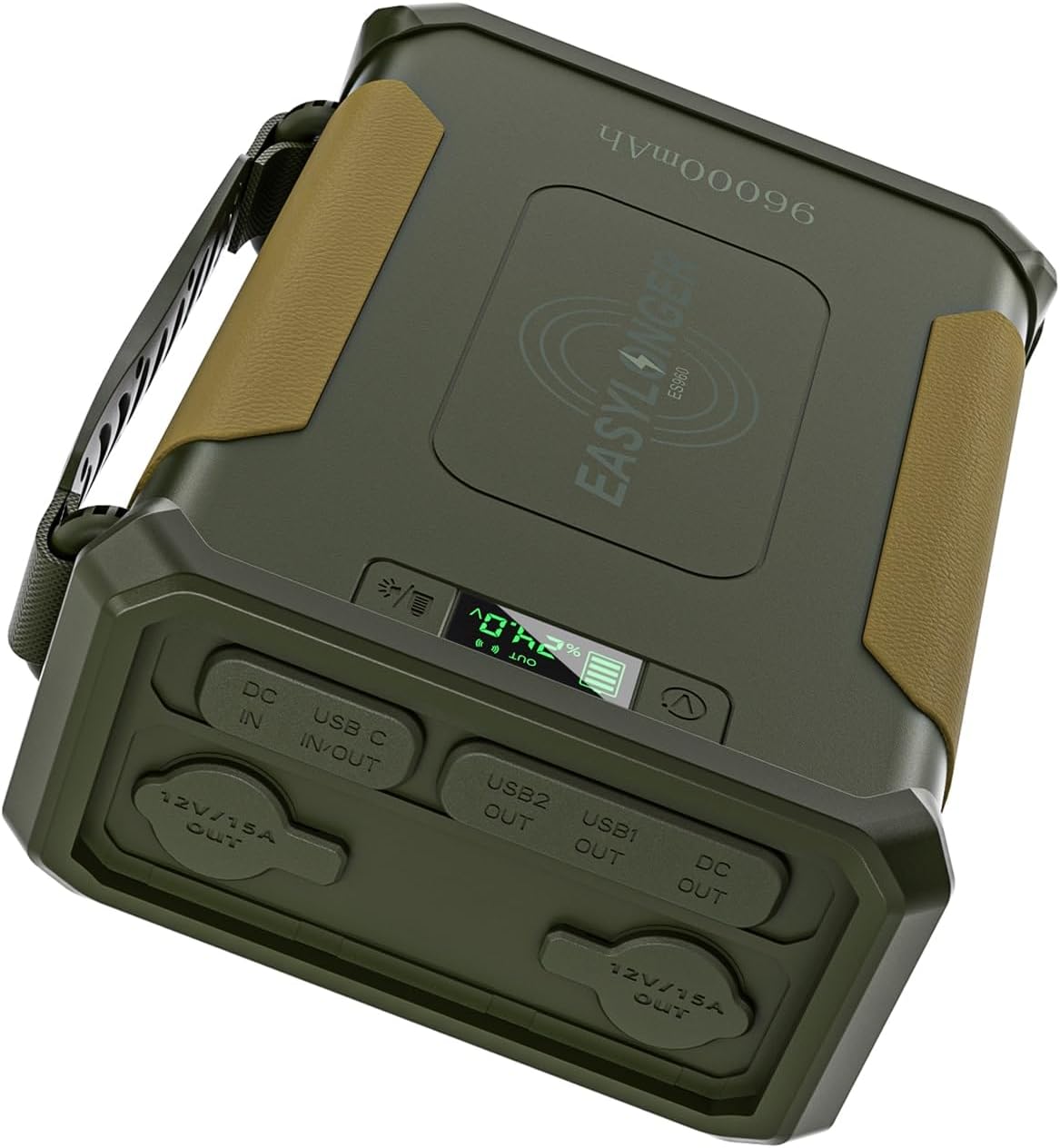
- Easylonger ES960 (~$300, 297Wh) — another high-capacity ResMed-compatible option with a universal cable kit, well-suited to campers and RVers who want more runtime per charge.
For machine-specific guidance, see the AirSense 11 battery shortlist and CPAP battery compatibility guide.

How much does the ResMed Power Station II cost? (price and value)
The ResMed Power Station II price typically ranges from $249 to $299 as of June 2026, with most fulfillment-by-Amazon and authorized-dealer listings clustering near $279. Prices vary by retailer and stock level, so always check the current price before buying — discontinued-line discounts and third-party markups both show up regularly.
That figure is for the battery, charging brick, and a short DC cable only. The ResMed-to-machine DC cable for your specific CPAP is sold separately, so budget another $25–$40 if you don't already own one. The optional two-battery connector cable, if you want to chain units for ~20 hours of runtime, adds roughly $30–$50 more.
| What you're buying | Typical price (June 2026) |
|---|---|
| RPS II battery + brick + short DC cable | $249 – $299 |
| ResMed machine-specific DC cable (sold separately) | $25 – $40 |
| Two-battery connector cable (optional) | $30 – $50 |
| Cost per watt-hour (97 Wh) | ~$2.55 – $3.10 / Wh |
Is the ResMed Power Station II worth the price? At roughly $2.55–$3.10 per watt-hour, the RPS II is one of the more expensive CPAP batteries per unit of capacity — you are paying an OEM-branding premium. The Medistrom Pilot-24 Lite delivers near-identical 97.7 Wh runtime for less and bundles the ResMed cable, while a 1,024 Wh BLUETTI Elite 100 V2 power station ($499) lands closer to $0.49/Wh. The RPS II earns its price only if you fly often and value a light, FAA-clean, first-party ResMed unit that disappears through airport security. For everyone else, the price-per-Wh is hard to justify in 2026. For the full field, compare it on the best CPAP backup batteries shortlist.
What is the ResMed Power Station II (RPS II)?
The ResMed Power Station II is ResMed's first-party portable lithium-ion battery for ResMed CPAP and BiPAP machines. It plugs into the same 24V or 26V DC input as the wall adapter, runs the machine directly off battery, and recharges from the same brick. There is no AC inverter, no USB output, and no display — just a power button, a fuel-gauge LED bar, and a voltage selector.
You will see "RPS II" and "RPS II V2" used interchangeably online. ResMed quietly revised the RPS II a few years into its life with a slightly updated charging board; the externals are identical. Anything sold today as new stock is the V2 revision. The confusion only matters if you buy a used or "open box" unit — older inventory may have been sitting on a shelf for years, and Li-ion degrades whether or not you use it.
In the box you get the battery, the charging brick, and a short DC cable. The ResMed-to-machine cable for your specific CPAP is sold separately. That last detail surprises a lot of buyers — budget another $25 – $40 for the right cable if you don't already own one.
For a wider tour of every ResMed-compatible option, see our CPAP battery compatibility guide.
ResMed Power Station II specs (and what they mean for your sleep)
In short: the RPS II's 97 Wh capacity, 24V/26V dual output, and ~4-hour charge time are tuned specifically for ResMed CPAP and BiPAP machines — not for general electronics. Each spec maps to a real-world sleep trade-off below.
Capacity: 97 Wh and the 100 Wh FAA cap
97 Wh is not a coincidence. According to FAA PackSafe rules, spare lithium batteries in carry-on luggage are capped at 100 Wh without airline pre-approval, and ResMed deliberately engineered the RPS II to sit just under that line. Anything labelled 100 Wh or higher requires airline approval — and many airlines either refuse the request or take days to respond. The 97 Wh figure means you can walk through any TSA checkpoint in the U.S. and most international equivalents with the battery in your carry-on, no paperwork.
Output voltage: 24V or 26V
The rear panel has a small switch labelled 24V / 26V. Set it to 24V for the AirSense 11, AirCurve 11, AirSense 10, and AirCurve 10. Set it to 26V for the older S9 series. Get this wrong and you will either trip the battery's protection circuit (no harm done) or under-volt the machine and see error codes. There is no auto-detect.
Weight and form factor
At 0.9 kg (~2 lb) and roughly the size of a hardback novel, the RPS II is one of the lighter purpose-built CPAP batteries. The Medistrom Pilot-24 Lite is slightly lighter again, but the difference is meaningless in a carry-on. Both will disappear into a backpack.
Charge time
ResMed's spec is "approximately 4 hours" to >95%. In our testing that is accurate from a fully-drained pack. There is no fast-charge mode and no USB-C input — you charge from the dedicated brick or not at all.
If you don't know how many watts your CPAP actually pulls, work through how many watts your CPAP draws before buying any battery.
Real-world ResMed Power Station II runtime tests (AirSense 11 + AirCurve)
Tested at room temperature on a fresh RPS II, the AirSense 11 ran 10–13 hours dry at 10 cm H2O, and the AirCurve 11 ran 6–8 hours dry at 14/10 cm — both well below ResMed's headline "13 hour" figure once humidification is enabled.
Runtime, not capacity, is what actually matters. ResMed quotes a single rosy figure ("up to 13 hours"). Here is the runtime split by realistic scenario.
| Scenario | Machine | Pressure | Humidifier | Heated tube | Tested runtime |
|---|---|---|---|---|---|
| Travel-mode dry | AirSense 11 | 10 cm | OFF | OFF | 10–13 hr |
| Travel-mode warm tube | AirSense 11 | 10 cm | OFF | ON | 6–8 hr |
| Full comfort | AirSense 11 | 10 cm | ON | ON | 4–6 hr |
| BiPAP dry | AirCurve 11 | 14/10 cm | OFF | OFF | 6–8 hr |
| BiPAP full comfort | AirCurve 11 | 14/10 cm | ON | ON | 3.5–5 hr |
A few takeaways. First, the humidifier alone is worth roughly half your runtime — if you can live one night without it, the RPS II becomes a much better battery. Second, BiPAP draws materially more current than CPAP, so AirCurve users should plan for shorter nights or chain two batteries. Third, ResMed's "13-hour" figure is real, but only in dry travel mode at moderate pressure.
Since the RPS II is discontinued, the Medistrom Pilot-24 Lite is now the closest ResMed-native match for these runtime numbers — a 97.7 Wh 24V pack that ships with the ResMed cable:

You could chain two RPS II units with the optional connector cable for ~20 hours of total runtime — enough for two humidifier-off nights or one humidifier-on night plus a buffer. To get a number tuned to your specific pressure and humidifier setting, run your numbers through our runtime calculator. For machine-specific recommendations, see the AirSense 11 battery shortlist and AirCurve battery picks.
ResMed Power Station II travel and FAA / TSA status
Yes — the ResMed Power Station II is FAA carry-on legal without airline pre-approval. At 97 Wh it sits under the 100 Wh threshold for spare lithium batteries set by the FAA PackSafe program and matched by TSA, IATA, and most international civil aviation authorities. You can carry up to two spare lithium batteries in this size band per passenger.
Three practical rules for the airport:
- Carry-on only. Spare lithium batteries are forbidden in checked luggage on every major airline. If gate-checking your bag is forced (small regional jets), pull the battery out first.
- Terminals off. Tape over the DC output if you are carrying the battery loose. A short circuit from a stray paperclip is the most common cause of in-flight battery incidents.
- Be ready to explain it. Most TSA agents have seen a CPAP battery before, but if asked, the magic words are "97 watt-hour lithium-ion CPAP medical battery, under the 100 watt-hour limit". CPAP machines themselves are also exempt from your carry-on count under the medical equipment rule.
For the full airline rulebook including international quirks, see our CPAP airline TSA rules guide.
Where the ResMed Power Station II falls short in 2026
In short: the RPS II falls short on price-per-watt-hour, cycle life, and feature set. It launched years before the current crop of LiFePO4 power stations and USB-C PD batteries, and it shows in four specific ways.
Price-per-Wh is poor
At $249 – $299 for 97 Wh, the RPS II costs roughly $2.55–$3.10 per watt-hour. The Medistrom Pilot-24 Lite is closer to $2.50/Wh, the EASYLONGER ES270 (99.9 Wh, $139.99) is around $1.40/Wh, and a BLUETTI Elite 100 V2 (1,024 Wh, $499) lands at about $0.49/Wh. You are paying a ResMed-branding premium.
Li-ion, not LiFePO4
The RPS II uses standard lithium-ion cells with a roughly 500-cycle service life before you see meaningful capacity loss. LiFePO4 packs (used in most modern power stations, such as the Anker SOLIX C300 and BLUETTI Elite 100 V2) deliver 2,000–6,000 cycles and tolerate heat better. For a deep dive on why this matters, see why LiFePO4 batteries last 6× longer.
No USB-C PD, no AC outlet, no display
The RPS II will not charge your phone, run a laptop, or power a CPAP that only accepts AC input (rare, but it happens with older Philips machines). There is no LCD — just a four-segment LED bar. In 2026 those omissions feel dated.
Watch the production date
Li-ion degrades on the shelf at roughly 2–3% capacity per year even with zero use. A "new" RPS II from a low-volume seller may have spent two or three years in a warehouse. Buy from a fulfillment-by-Amazon listing or an authorized ResMed dealer, and check the production date sticker on the underside of the unit before your return window closes.
ResMed Power Station II vs the alternatives
The bottom line: the RPS II is the best pick only if you fly often and want OEM branding. The Medistrom Pilot-24 Lite is the closest ResMed-native travel pick, the EASYLONGER ES270 is the budget FAA-legal pick, and a power station like the Anker SOLIX C300 or BLUETTI Elite 100 V2 wins for home outages.
RPS II vs Medistrom Pilot-24 Lite
This is the closest head-to-head. The Pilot-24 Lite is 97.7 Wh, weighs slightly less, and bundles the ResMed DC cable in the box. It is the better value for most ResMed travelers.
The RPS II wins on OEM-branded peace of mind, a slightly more refined fit and finish, and the optional two-battery chaining cable. The Pilot-24 Lite wins on price, weight, and out-of-the-box completeness. Read our full Medistrom Pilot-24 review for the deep comparison.
RPS II vs EASYLONGER ES270
We used to compare the RPS II against the Freedom V2 here, but the Freedom V2 is currently unavailable on Amazon. The in-stock alternative is the EASYLONGER ES270: 99.9 Wh of Li-ion (so runtime lands in the same range as the RPS II's 97 Wh), FAA carry-on legal without airline approval, and a selectable 12V/19V/24V output with included cables for the AirSense 10/11, AirCurve 10/11, and AirMini. It weighs 1.3 lb, adds a 100W USB-C port the RPS II never had, and costs $139.99, about half the RPS II's old price. Its review base is smaller (around 150 ratings), and it is not first-party ResMed gear.

EASYLONGER ES270 CPAP Battery (99.9Wh, FAA Carry-On)
$139.99
Check price on AmazonPick the ES270 if you want an FAA-clean travel battery on a budget that also charges your phone. For background on the Freedom V2, see our Freedom V2 review.
RPS II vs a small power station
If your primary need is home backup during outages — not air travel — a small power station beats any CPAP-specific battery on flexibility. The Anker SOLIX C300 (288 Wh LiFePO4, $329.99) runs an AirSense 11 for about 11–13 hours dry through its AC outlet, and the BLUETTI Elite 100 V2 (1,024 Wh LiFePO4) stretches that to roughly five nights. Both charge phones and laptops, both have a UPS mode (under 10 ms) that keeps the CPAP running when the grid drops, and both double as camping power.

Anker SOLIX C300 Portable Power Station (288Wh LiFePO4, 300W AC)
$329.99
Check price on Amazon
BLUETTI Elite 100 V2 Portable Power Station (1024Wh LiFePO4, 1800W)
$499 – $899
Check price on AmazonThe trade-off is weight (9.1–25.3 lb) and FAA status (both are over 160 Wh, so they can't fly).
RPS II vs a UPS
A UPS like the Zopec Explore Mini sits between your wall outlet and your CPAP and switches over automatically in under 20 ms when the power fails. The RPS II can't do that — you'd wake up, plug in, and start over.

For full blackout planning, see our power outage guide.
Who the ResMed Power Station II is genuinely best for in 2026
- Frequent flyers on the AirSense 11. Light, FAA-clean, OEM-branded, dead-simple at security.
- ResMed loyalists who want first-party gear and don't care about price-per-Wh.
- Existing ResMed-cable owners who want a drop-in battery without re-buying adapters.
Who should skip the RPS II
- Home-only backup users. A power station gives you more capacity, more outlets, and runs your phone too.
- Long-haul campers and RVers. Pick a 500–1,000 Wh LiFePO4 station like the BLUETTI Elite 100 V2 instead.
- Anyone on a budget. The Medistrom Pilot-24 Lite delivers ~95% of the RPS II for ~80% of the price.
- AirCurve users who run humidified. Sub-5-hour runtime is too tight; go bigger.
How to buy the ResMed Power Station II without getting burned
Note: ResMed has discontinued the RPS II and it's no longer sold on Amazon, so the only units left are used, open-box, or old dealer stock. If you'd rather buy new, skip to the current ResMed-compatible alternatives above. If you're still evaluating a leftover unit, these rules apply doubly:
- Verify it's the V2 revision. All current new stock is, but used or "open box" listings may not be.
- Check the production date on the underside before your return window closes. If it's more than 18 months old, exchange it.
- Buy fulfillment-by-Amazon or from an authorized ResMed dealer. Third-party sellers shipping from a garage are how stale Li-ion ends up in customer hands.
- Buy the right ResMed DC cable for your specific machine if it isn't bundled — AirSense 11 needs the 24V version.
- Size the battery to your actual draw. Walk through the battery sizing guide before pulling the trigger.
Frequently asked questions
How much does the ResMed Power Station II cost? The ResMed Power Station II price typically ranges from $249 to $299 as of June 2026, with most listings near $279. That covers the battery, charging brick, and a short DC cable — the ResMed machine-specific DC cable is sold separately for about $25–$40. Prices vary by retailer, so check the current price before buying. At roughly $2.55–$3.10 per watt-hour it carries an OEM premium, so it is best value mainly for frequent flyers who want a light, FAA-clean ResMed-branded battery.
How many nights will the ResMed Power Station II run an AirSense 11? The ResMed Power Station II runs an AirSense 11 for roughly one full 8–10 hour night at a pressure of 10 cm H2O with the humidifier and heated tube turned off. Switch either feature on and you drop to about 4–6 hours. Plan one RPS II per night you need to cover, or chain two batteries with the optional connector cable for around 20 hours.
Is the ResMed Power Station II FAA and TSA approved? Yes. The ResMed Power Station II is a 97 Wh lithium-ion pack, sitting just below the 100 Wh FAA and TSA threshold for carry-on lithium batteries. It travels in your carry-on without airline pre-approval. Spare lithium batteries are not allowed in checked luggage under any circumstance.
Does the Power Station II work with the AirSense 11 and AirCurve 11? Yes. The RPS II is compatible with the AirSense 10, AirSense 11, AirCurve 10, AirCurve 11, S9 series, and Lumis machines using the matching ResMed DC cable. Set the rear-panel voltage switch to 24V for AirSense 11 and AirCurve 11, or 26V for older S9 hardware.
Is the ResMed Power Station II better than the Medistrom Pilot-24 Lite? For OEM peace of mind and pure ResMed compatibility, yes. For runtime per dollar and lower weight, the Pilot-24 Lite wins. It is 97.7 Wh, lighter, cheaper, and includes the ResMed cable in the bundle.
Should I buy the RPS II in 2026 or pick a power station instead? Buy the RPS II if you fly often and want the smallest FAA-friendly ResMed-branded option. Skip it for an EASYLONGER ES270 if you want similar FAA-legal runtime for about half the price, or for an Anker SOLIX C300 / BLUETTI Elite 100 V2 if you also need home outage backup plus phone and laptop charging.
Related reading
- Medistrom Pilot-24 Lite review
- Freedom V2 CPAP battery review
- CPAP battery compatibility guide
- Best battery for the AirSense 11
- LiFePO4 vs Li-ion for CPAP
- CPAP airline TSA rules
What to do next
If you fly often on a ResMed machine and want the simplest FAA-clean option, the Medistrom Pilot-24 Lite is now the pick to buy — it will get you through security without a conversation, and it's the closest in-stock replacement for the discontinued RPS II. If your real need is home outage backup, skip both and read the CPAP power outage guide, then pick a small power station that also charges your phone. Still unsure? Run your specific pressure and humidifier setting through the runtime calculator, then cross-reference against our overall best CPAP backup batteries shortlist.